What Are the Best Mouse Traps for Large-Scale Industrial and Commercial Control?
August 13, 2026
Choosing the best mouse trap for a commercial or industrial facility is a critical decision that directly impacts operational hygiene, safety standards, and regulatory compliance. Infestations in these environments are not merely nuisances; they represent significant financial risks, potential damage to infrastructure, and threats to product integrity. No single tool works in every scenario, but facility managers and professional pest control operators prioritize high-capture rates, long-term durability, and safety for commercial use. For heavy-duty industrial settings, heavy-duty snap traps and cage traps often prove most effective, while specialized glue boards remain a staple for monitoring and smaller interior spaces. Understanding how each device functions helps facility managers select the right inventory to mitigate risk effectively. This guide explores the mechanisms of different traps, their best applications, and how to build a robust control program.
Evaluating Mechanism Effectiveness for Commercial Facilities
Commercial spaces, such as food processing plants, warehouses, and logistics centers, often struggle with persistent rodent issues. Selecting the right hardware requires balancing mechanical efficiency with ease of maintenance. Facility managers must evaluate devices based on their ability to handle high-traffic areas without requiring constant, labor-intensive resetting.
Professional pest control technicians frequently stock a diverse inventory of solutions to manage different site requirements. This diverse inventory ensures they can address specific challenges as they arise in industrial warehouses or food processing plants. For instance, an area prone to moisture requires different materials than a dry, climate-controlled storage room. Professionals assess the structural layout of a building, identifying rodent entry points and high-traffic pathways before deploying any hardware. This systematic approach ensures that every trap serves a strategic purpose rather than being placed randomly.
Traditional Mouse Snap Traps for Quick Results
Mouse snap traps provide a direct and rapid method for eliminating rodents. These devices utilize a high-tension spring mechanism to deliver an instant strike upon triggering. Their simplicity remains a significant advantage for fast-paced industrial environments where time is of the essence.
Modern designs have improved durability, allowing for multiple uses in demanding conditions. When sourced from a reliable mice trap supplier, these traps offer consistent performance. They remain the preferred choice for areas where immediate results are necessary to prevent population growth. Unlike poison baits, which can lead to rodents dying in inaccessible wall voids or mechanical equipment, snap traps allow for quick verification and disposal of the pest. This minimizes the risk of odors and secondary infestations.
For effective deployment, technicians often place these traps in pairs, positioned perpendicular to walls. Rodents feel safer running along vertical surfaces, and this orientation intercepts their movement path. Furthermore, utilizing high-quality, durable materials ensures that the trap does not degrade when exposed to the temperature fluctuations commonly found in industrial settings.
Versatile Mouse Trap Cage Designs
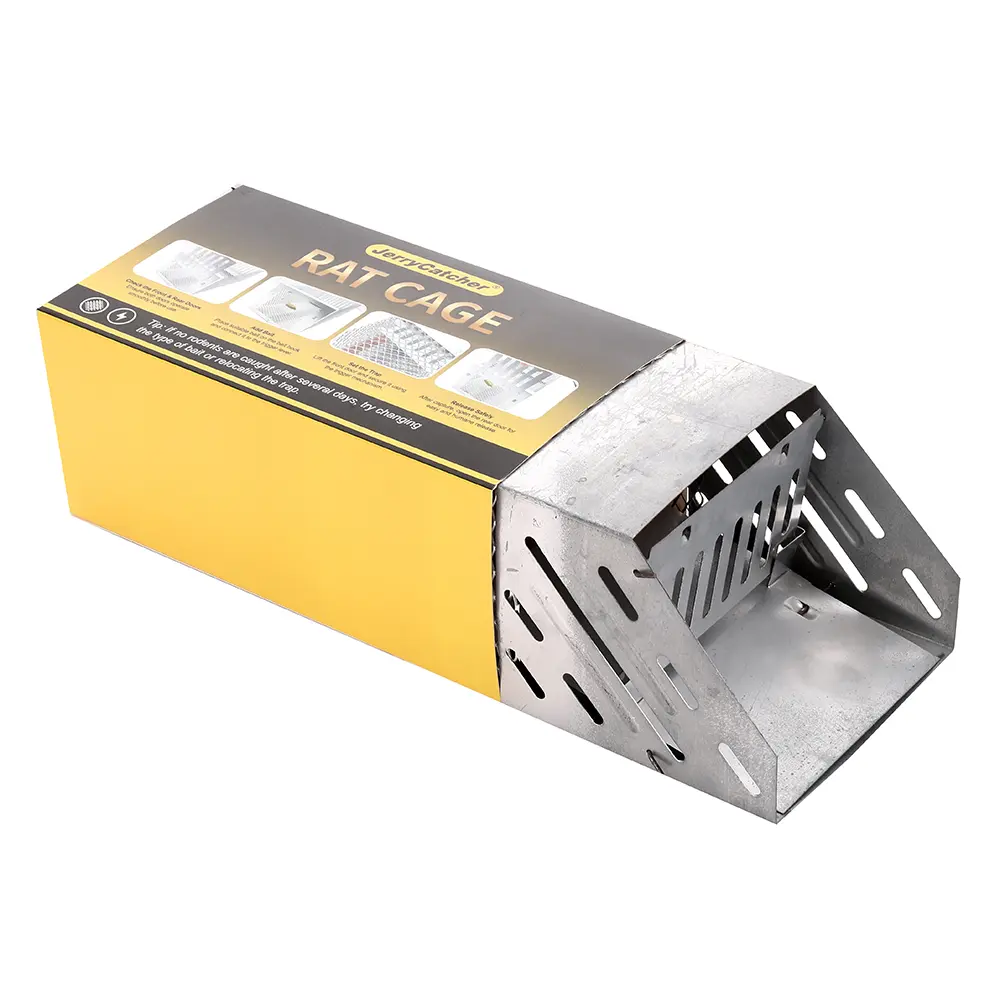
A mouse trap cage works by using a door system that locks once the rodent enters. This approach avoids the use of poisons, making it ideal for sensitive environments such as school cafeterias or storage areas containing food products. By utilizing a mechanical closure rather than chemical toxins, cage traps provide an ethical and safe way to manage rodent populations without contaminating sensitive areas.
Facility managers often prefer this method because it allows for easy disposal and minimal human-rodent contact. You can place these units along known rodent runways to intercept activity before it reaches sensitive equipment. If you need a more discreet option for common areas, consider using specialized tunnel mouse traps to guide rodents effectively. These tunnel designs mimic the natural tight spaces that rodents prefer, significantly increasing the capture rate compared to open designs.
Strategic Use of Mouse Glue Boards for Monitoring
Mouse glue boards are essential tools for identifying active rodent pathways. These boards use a powerful adhesive to hold mice in place, providing a clear visual indication of where activity is highest. They serve two primary functions: capturing pests and acting as a monitoring station to assess the scope of an infestation.
Many businesses find that a mouse trap glue pad is highly effective when placed near entry points or along walls. For larger inventory needs, sourcing high-quality wholesale mouse traps ensures you always have enough supplies on hand to cover expansive warehouse footprints. When managing broader infestations, using a consistent mouse tunnel trap can enhance your trap placement strategy by funneling rodents directly onto the adhesive surface.
Technicians also use these boards to monitor the effectiveness of other control measures. If a previously high-activity area shows fewer captures on glue boards, the overall management program is working as intended. This data-driven approach is critical for maintaining high standards in industries subject to regular inspections and audits.
Data-Driven Selection and Resource Allocation
Selecting the right equipment for your needs requires a careful assessment of facility layout and target species. Not all traps are created equal, and understanding the nuances of each type allows for more precise resource allocation.
Table 1: Comparison of Common Rodent Control Devices
| Trap Type | Best Use Case | Primary Advantage | Maintenance Level |
| Mouse Snap Traps | High-traffic runways | Instant elimination | High (requires resetting) |
| Mouse Trap Cage | Food storage areas | Non-toxic capture | Low (resetting not required) |
| Mouse Glue Boards | Monitoring and small spaces | High stickiness | Minimal (disposable) |
If you need professional guidance on selecting the best equipment for your specific inventory requirements, please reach out to our team at this link.
Maintenance and Best Practices for Implementation
Consistent monitoring remains the cornerstone of any effective rodent management program. Placing traps in areas with high rodent traffic increases the likelihood of capture. Technicians should check traps regularly to remove rodents and refresh bait as needed. Neglecting maintenance leads to trap aversion, where rodents learn to bypass devices that remain unserviced or clogged.
When using sticky solutions, always check your inventory for a reliable mouse trap glue pads supplier to ensure quality. The stickiness and longevity of the adhesive are paramount for successful captures in humid or dusty industrial environments. Proper placement, maintenance, and regular inspection are the keys to long-term control.
For large-scale facilities, maintaining a map of all trap locations is vital. This digital or physical record allows for efficient checks, ensuring that no trap is missed. Technicians should also document capture dates and locations, which helps identify the source of the infestation rather than just treating the symptoms.
Long-term Sanitation and Exclusion Strategies
While trapping is essential, it must be part of an Integrated Pest Management (IPM) strategy. IPM emphasizes sanitation and exclusion as the primary means of prevention. Traps are a reactive measure; however, sealing entry points and removing food sources provides a proactive defense.
Rodents only need a small opening, roughly the size of a dime, to gain entry. Facility managers must conduct regular inspections of building perimeters, sealing gaps with steel wool, concrete, or metal flashing. Furthermore, managing waste disposal is critical. If rodents cannot find food, they are much less likely to establish a nest. By combining rigorous trapping schedules with structural integrity, facilities can drastically reduce the reliance on traps over time.
The Importance of Professional Partnerships
Building a relationship with a trusted manufacturer like Lanxi Puyoung provides more than just hardware; it provides a pathway to expertise. We understand the specific regulatory requirements facing businesses today. Our products undergo extensive testing to ensure they perform reliably in diverse conditions, from cold storage facilities to high-heat production lines. By partnering with a dedicated supplier, your business gains access to consistent supply chains, bulk pricing advantages, and products engineered specifically for heavy-duty, long-term use. Professional-grade equipment minimizes failures, reduces the need for frequent replacements, and ultimately lowers the total cost of ownership for your pest control operations.
Frequently Asked Questions
Q: How often should I check my traps in a warehouse?
A: You should check commercial traps daily during the initial stages of control. Once activity decreases, you may switch to a weekly or bi-weekly inspection schedule.
Q: Are snap traps safe for use around employees?
A: Yes, when placed inside tamper-resistant stations, these traps pose no risk to staff members or other non-target animals.
Q: Which trap is best for large-scale food warehouses?
A: A combination of snap traps for elimination and cage traps for non-toxic capture works best for large-scale food facilities.
Q: How can I tell if my trap placement is successful?
A: Successful placement is indicated by consistent capture rates. If a trap remains empty for two weeks, it is time to move it to a different location.
Q: Do glue boards require special storage?
A: Yes, they should be stored in a cool, dry place to maintain the integrity of the adhesive, away from extreme heat.
About Lanxi Puyoung
Lanxi Puyoung is an established manufacturer specializing in high-quality pest control solutions for global markets. We focus on providing durable, reliable equipment for professional pest control businesses and wholesale distributors worldwide. Our commitment to rigorous quality control and engineering excellence ensures that every product meets the demands of heavy-duty industrial application. We pride ourselves on the design and performance of our solutions, which are trusted by professionals across the globe to keep facilities clean and compliant.
Reference
- National Center for Biotechnology Information (NCBI). Rodent control in urban environments. https://www.ncbi.nlm.nih.gov/pmc/articles/PMC6358320/
- Environmental Protection Agency (EPA). Integrated Pest Management Principles. https://www.epa.gov/ipm
- Centers for Disease Control and Prevention (CDC). Rodents. https://www.cdc.gov/rodents/index.html