What Are the Best Traps for Mice? A Practical Guide for Pest Control Buyers
August 17, 2026
The best mouse trap depends on the infestation, placement environment, target user, and required control method. For many indoor applications, mouse snap traps remain a practical choice because they provide a direct mechanical control method and allow users to identify a catch. A mouse trap cage can suit buyers who require live capture, while mouse glue boards offer another mechanical option for specific settings. For B2B buyers, the decision goes beyond trap type. Product dimensions, trigger sensitivity, material, adhesive performance, packaging, storage, compliance, and target market all affect purchasing decisions. For distributors, property managers, and pest control companies, the right trap range should cover different operating conditions rather than rely on one product. A supplier may therefore stock several types of mice trap products and position each one around a specific customer requirement.
Which Types of Mouse Traps Are Available?
Mouse control products use several mechanical approaches.
The main categories include snap traps, live-capture cages, and glue boards.
Each design works differently and creates different requirements for placement, handling, disposal, and customer education.
The Centers for Disease Control and Prevention identifies snap traps, glue boards, and live traps among the mechanical trapping options for rodents.
For B2B buyers, product selection should start with the intended application.
A pest control distributor may need several designs.
A food storage facility may have different requirements from a household retailer.
A warehouse may also require a different trap format from a hotel or restaurant.
Mouse Snap Traps
Mouse snap traps use a spring-loaded mechanical mechanism.
The trap activates when the mouse interacts with the trigger.
This design has remained widely used because the mechanism is straightforward.
The CDC describes snap traps as one of the effective methods for temporary mouse control. (CDC Stacks)
For commercial buyers, the key factors include trigger design, spring strength, base material, reset mechanism, and overall durability.
The product should also allow users to position it correctly.
Placement matters because mice often travel along walls and established runways.
A well-designed trap still needs appropriate positioning to perform as intended.
Mouse Trap Cages
A cage trap captures the mouse inside an enclosed structure.
The mechanism normally uses an entry door connected to a trigger system.
When the mouse activates the mechanism, the door closes.
A cage design can appeal to customers seeking live capture.
However, live capture does not eliminate the need for responsible handling.
The EPA notes that live traps capture rodents without killing them, but users still need to manage the captured animal appropriately.
This makes instructions and customer education important parts of the product package.
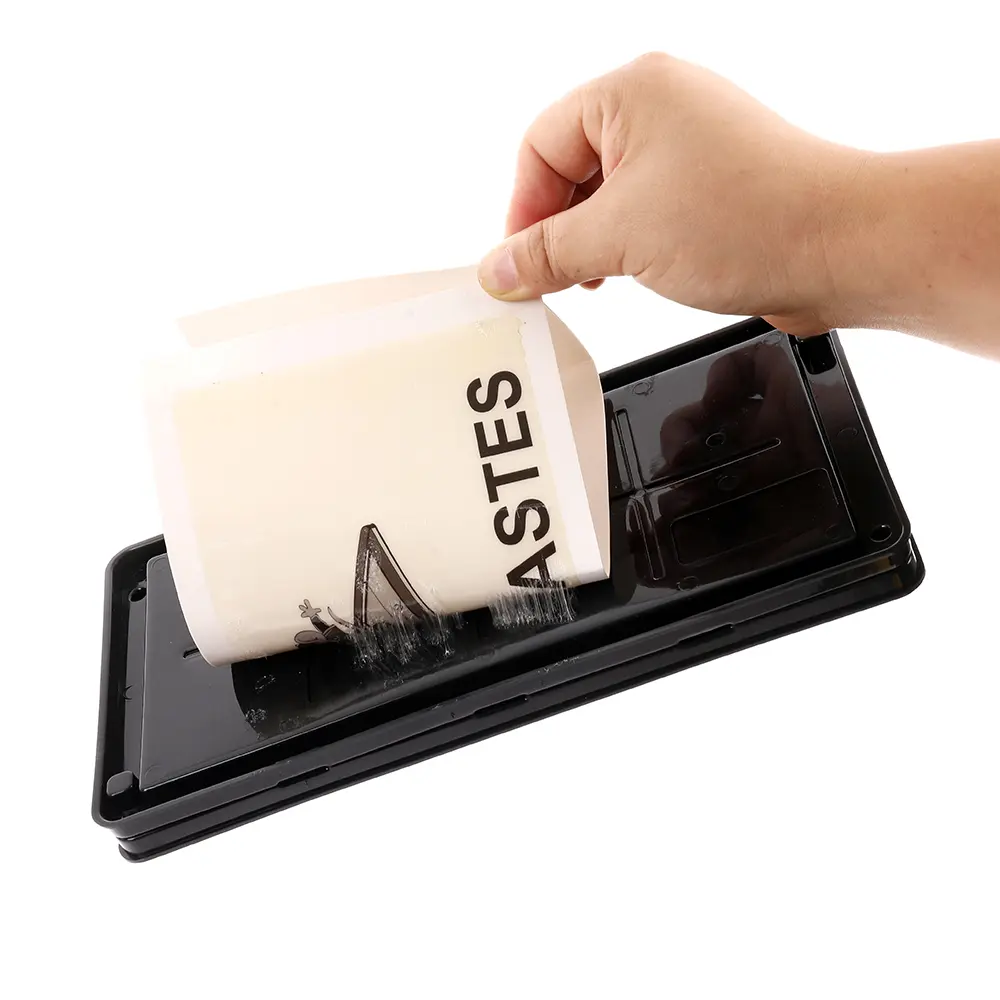
Mouse Glue Boards
Glue boards use a pressure-sensitive adhesive surface.
When a mouse contacts the adhesive, movement becomes restricted.
A mouse trap glue boards product may appeal to buyers looking for a compact, ready-to-use trap format.
However, glue traps raise animal-welfare concerns in some markets.
The CDC’s hantavirus guidance advises against glue traps for household rodent control.
B2B buyers should therefore check the laws, customer requirements, and accepted pest-control practices in the destination market.
How Should Buyers Compare Mouse Trap Types?
There is no single trap design that fits every commercial application.
A purchasing decision should consider where the trap will operate and who will handle it.
For example, a retailer may prioritize compact packaging.
A pest control contractor may focus on repeat use and field durability.
A warehouse operator may prioritize easy inspection and replacement.
The following table provides a general comparison.
| Trap Type | Main Mechanism | Typical Buyer Considerations | Reuse Potential | Handling Considerations |
|---|---|---|---|---|
| Snap trap | Spring mechanism | Trigger, durability, reset | Often reusable | Requires safe handling |
| Cage trap | Mechanical door | Entry size, structure, release mechanism | Usually reusable | Requires live-animal handling |
| Glue board | Adhesive surface | Adhesive performance, board size | Generally single-use | Requires careful disposal |
| Enclosed trap | Internal mechanical mechanism | Safety, inspection, access | Depends on design | Useful where enclosed placement matters |
Caption: General comparison of common mechanical mouse trap formats.
The table provides a purchasing framework rather than a universal ranking.
Product performance depends on design, placement, environmental conditions, and correct use.
What Matters More Than the Trap Type?
Trap placement can strongly influence results.
The CDC recommends placing snap traps in areas where signs of mouse activity appear. These signs include droppings, nesting material, food damage, and other evidence.
A poor location can reduce the chance of interaction.
A high-quality trap cannot compensate for unsuitable placement.
This principle matters to distributors because product instructions should explain correct positioning.
Clear instructions can reduce misuse and customer complaints.
What Makes Mouse Snap Traps Suitable for Wholesale Buyers?
Wholesale mouse traps need to meet both functional and commercial requirements.
A buyer may order hundreds or thousands of units.
Small differences in component quality can therefore become significant at scale.
Material and Construction
Common construction materials include plastic, metal, wood, or combinations of these materials.
Material selection affects durability, cost, weight, corrosion resistance, and appearance.
For example, a metal spring requires consistent mechanical performance.
A plastic housing needs sufficient strength around stress points.
A wooden base may provide a traditional format but requires appropriate material selection and storage conditions.
The supplier should provide clear material specifications.
Trigger Design
The trigger is one of the key functional components.
A trigger that requires excessive force may reduce interaction.
A trigger that activates too easily may create handling problems.
The right balance depends on the product design.
For B2B orders, buyers should request samples before approving mass production.
Sample testing can evaluate:
- Trigger response
- Spring action
- Reset process
- Structural strength
- Packaging quality
- Surface finish
- Dimensional consistency
These checks are more useful than relying on product photographs alone.
Packaging for Distribution
Wholesale packaging requires careful planning.
Retail products may use individual blister packs, cartons, or printed boxes.
Professional pest control products may use bulk cartons.
Packaging should protect the trap from damage during transport.
It should also communicate important instructions.
For export orders, buyers should confirm carton dimensions, unit quantity, gross weight, labeling, and pallet requirements.
These details affect logistics costs.
They also influence warehouse efficiency.
When Should Buyers Consider a Mouse Trap Cage?
A cage format can be appropriate when live capture forms part of the customer’s operating preference.
A cage trap normally provides an enclosed capture area.
The design should allow easy inspection.
The door should close consistently after activation.
The structure should also prevent unintended escape.
A rat trap cage can serve customers who need a larger cage format for rodents beyond small mice.
However, buyers should confirm the actual target species.
A trap designed for rats may not provide the same interaction characteristics as a dedicated mouse model.
Cage Size and Entry Design
Dimensions influence usability.
An entry that is too large may allow unintended species to enter.
An entry that is too small may reduce interaction.
The internal mechanism also needs sufficient sensitivity.
For wholesale buyers, the relationship between cage dimensions and target species should form part of the product specification.
This becomes especially important when the same product range includes mouse and rat traps.
Live Capture Requires a Handling Plan
A live trap does not end the control process.
The captured animal still needs appropriate handling.
The EPA recommends sealing entry points when addressing rodent infestations. It also notes that rodents released outside may return if access points remain open.
This highlights a broader point.
Trap products work best as part of an integrated pest management strategy.
Buyers should consider exclusion, sanitation, monitoring, and trapping together.
Are Mouse Glue Boards Suitable for Every Market?
No.
Glue boards can offer a compact mechanical trapping format, but market acceptance varies.
Some customers use adhesive traps in commercial pest monitoring.
Other customers avoid them because of animal-welfare concerns or local restrictions.
The regulatory situation also varies by country.
In the United States, the EPA treats certain pest-control devices differently from pesticide products. Its guidance specifically addresses devices that use physical or mechanical means to trap pests.
This means B2B buyers should review destination-market requirements before importing or distributing glue boards.
Adhesive Performance
For products using glue, adhesive performance becomes a core specification.
Buyers should consider:
- Adhesive strength
- Adhesive coverage
- Board dimensions
- Storage temperature
- Shelf life
- Dust resistance
- Packaging protection
Environmental conditions can affect adhesive performance.
Heat, dust, moisture, and long storage periods may influence the product.
Suppliers should therefore provide appropriate storage recommendations.
Product Positioning
A distributor should avoid presenting every trap as interchangeable.
Instead, product descriptions should explain the intended use.
For example, a glue board can be positioned around monitoring or mechanical trapping applications that comply with local requirements.
A snap trap can serve customers seeking a reusable mechanical design.
A cage trap can address live-capture requirements.
This approach gives customers a clearer purchasing path.
What Should Buyers Look for in Wholesale Mouse Traps?
Wholesale purchasing involves more than unit price.
A low purchase price may not provide good value if the product generates high return rates or inconsistent performance.
B2B buyers should evaluate the complete supply proposition.
Quality Control
A supplier should maintain consistent production standards.
For mechanical traps, quality checks may include:
- Dimensions
- Material thickness
- Spring performance
- Trigger sensitivity
- Moving-part operation
- Structural strength
- Surface condition
- Adhesive coverage where applicable
- Packaging integrity
The inspection method should match the product design.
A buyer can also establish an agreed sample standard before mass production.
This gives both parties a clear reference.
Order Quantity and Custom Packaging
Different distributors have different packaging requirements.
A retailer may need branded consumer packaging.
A pest control company may prefer bulk cartons.
A wholesaler may require multilingual instructions.
Custom packaging can also include:
- Product labels
- Barcodes
- Carton marks
- Instruction sheets
- Warning information
- Private-label branding
The supplier should confirm which customization options are available before production.
Supplier Communication
Good communication matters during large orders.
The buyer should receive clear information about:
- Product specifications
- Minimum order quantity
- Sample availability
- Production lead time
- Packaging options
- Inspection procedures
- Shipping terms
- Spare or replacement components
- Documentation
- After-sales support
This information helps purchasing teams compare suppliers on more than price.
How Can Distributors Build a Mouse Trap Product Range?
A broad product range can help distributors address different customer requirements.
However, adding products without a clear structure can make purchasing more difficult.
A better approach uses application-based categories.
Entry-Level Mechanical Traps
Basic snap traps can target general retail customers.
The product should remain easy to understand and operate.
Packaging should clearly explain the mechanism and intended use.
Professional Pest Control Products
Professional customers may require more durable designs.
They may also purchase larger quantities.
The focus can shift toward repeated use, inspection, replacement parts, and field handling.
A glue rat trap can represent one product category within a broader pest-control portfolio.
The actual product selection should reflect local regulations and customer practices.
Live-Capture Products
A live rat trap cage can serve customers seeking cage-style capture equipment.
A humane rat trap cage can also form part of a product range focused on live capture.
The supplier should provide accurate product dimensions and handling instructions.
Using the correct product terminology also helps distributors avoid confusion between mouse and rat equipment.
How Should Buyers Evaluate a Mouse Trap Supplier?
Supplier evaluation should combine product testing with commercial due diligence.
The first step is to request representative samples.
Test the actual product rather than evaluating only photographs.
The buyer should assess the mechanism, construction, packaging, and instructions.
Sample Testing
A useful sample evaluation can include:
| Test Area | Evaluation Point |
|---|---|
| Mechanism | Does the trap activate consistently? |
| Construction | Are components secure? |
| Materials | Do they match the specification? |
| Trigger | Does it respond appropriately? |
| Reset | Can users reset the trap easily? |
| Packaging | Does it protect the product? |
| Labeling | Are instructions clear? |
| Dimensions | Do they match the approved sample? |
| Finish | Are there visible defects? |
| Carton | Does it withstand normal transport? |
Caption: Suggested sample evaluation checklist for wholesale mouse trap buyers.
The buyer can then establish an approved sample.
Production batches should match that reference.
This process helps reduce disagreements during future orders.
Production Consistency
Large orders magnify small quality variations.
A supplier that produces one good sample may still need to demonstrate batch consistency.
Buyers can ask about inspection procedures and production controls.
For private-label orders, packaging and labeling should also remain consistent.
This is especially important when products enter regulated markets.
Should Mouse Traps Be Used Alone?
Traps should not be viewed as the only part of rodent management.
The EPA recommends identifying and preventing infestations alongside trapping or other control methods.
Food sources, water, shelter, and entry points can support continued mouse activity.
If these conditions remain, removing individual mice may not solve the underlying issue.
For commercial facilities, an integrated approach can include:
- Sanitation
- Food storage
- Entry-point sealing
- Monitoring
- Trapping
- Inspection
- Documentation
This approach also gives pest control companies a stronger framework for managing recurring problems.
FAQ About Mouse Traps
What is the best mice trap?
There is no universal best option. Snap traps, cage traps, and glue boards serve different applications. The choice should match the target species, location, handling requirements, and local rules.
Are mouse snap traps effective?
Snap traps can provide a direct mechanical control method. The CDC identifies them as an effective method for temporary mouse control.
What is a mouse trap cage used for?
A mouse trap cage captures the animal inside an enclosed structure. It may suit customers who prefer live capture.
Are mouse glue boards suitable for commercial use?
They may be used in some commercial pest-control settings. However, buyers should check animal-welfare expectations and local regulations before distribution.
What should I check when buying wholesale mouse traps?
Check construction, mechanism, materials, dimensions, packaging, sample consistency, minimum order quantity, lead time, labeling, and destination-market requirements.
Can a rat trap cage be used for mice?
It depends on the cage design. Buyers should check the entry dimensions and manufacturer’s intended target species.
How should wholesale mouse traps be packaged?
Packaging depends on the sales channel. Retail products may need individual branded packaging, while professional buyers may prefer bulk cartons.
Do mouse traps need instructions?
Clear instructions help customers position, activate, inspect, and dispose of traps correctly. They can also reduce misuse and customer complaints.
Should distributors buy several trap types?
A mixed range can help serve different customer requirements. Snap traps, cage traps, and adhesive products each address different purchasing preferences.
What should suppliers provide before a large order?
Suppliers should provide samples, specifications, packaging details, production information, inspection procedures, and applicable compliance documentation.
Why Choose Lanxi Puyoung for Mouse Trap Supply?
Lanxi Puyoung provides rodent control products for distributors, pest control businesses, retailers, and other commercial buyers. Its product range includes mechanical traps and related pest-control products designed for different purchasing requirements. For B2B customers, product selection should consider trap mechanism, target species, operating environment, packaging, regulatory requirements, and long-term supply consistency. Lanxi Puyoung can support buyers who need to develop a practical mouse trap range for different markets and customer segments. A clear product specification and sample-based evaluation can help buyers make better purchasing decisions before moving into wholesale orders.
References
The U.S. Environmental Protection Agency provides guidance on rodent control options, including snap traps and live traps. Its resources also explain prevention, placement, and safety considerations.
The U.S. Centers for Disease Control and Prevention provides technical information on rodent trapping methods, including snap traps, glue boards, and live traps.
The U.S. Environmental Protection Agency provides regulatory information concerning pest-control devices and glue-board products under FIFRA.
The U.S. Centers for Disease Control and Prevention also provides public-health guidance on rodent trapping and recommends keeping traps away from children and pets.