What Mouse Traps Work Best for Commercial Pest Control?
September 4, 2026
The mouse traps that work best depend on the site, mouse activity, trap design, inspection needs, and pest management plan. There is no single mice trap that fits every commercial environment. Mouse snap traps can suit targeted control where operators can place and inspect them safely. A mouse trap cage can fit situations that require live capture. Mouse glue boards may support monitoring or control in locations where regulations allow their use. For distributors and commercial buyers, product selection also depends on board size, trap construction, packaging, storage, supply capacity, and local requirements. The best choice comes from matching the trap to the application rather than selecting a product based only on price or capture claims.
For example, a warehouse with visible mouse activity along storage walls may benefit from mechanical traps positioned along established travel routes. A facility that requires a contained capture format may consider cage-style products. A pest control company may stock several trap formats because customer sites have different requirements.
The U.S. Centers for Disease Control and Prevention recommends traditional snap traps for reducing rodent populations and advises users to place traps where rodent activity occurs. The CDC currently advises against glue traps and live traps for household rodent control because of health and animal welfare concerns. Commercial users should therefore check local regulations, customer requirements, and professional pest management standards before selecting any trap type.
Which Type of Mouse Trap Works Best for Different Applications?
Trap selection should begin with the operating environment. A commercial building may contain storage rooms, food areas, loading docks, machinery spaces, and restricted-access zones. Each location can create different requirements.
The first step is to identify where mice are active. Look for droppings, gnaw marks, nesting material, damaged packaging, and repeated sightings.
The second step is to identify how the trap will be used. Some facilities need targeted capture. Others need ongoing monitoring across many locations.
The third step is to consider who will inspect and service the traps. A product that works well in one controlled area may not suit a high-traffic workplace.
Mouse Snap Traps for Targeted Control
Mouse snap traps use a mechanical trigger to capture mice. Their simple construction makes them widely available for residential and commercial applications.
The CDC recommends traditional snap traps for rodent population control and advises users to place them in areas where rodents have been seen or are likely to travel.
For commercial pest management, placement remains critical. A snap trap placed away from an active route may receive little interaction from mice.
A common placement method is to position the trap near a wall or other edge where mice tend to travel. The CDC recommends placing the baited end next to the wall so the trap forms a “T” with the wall.
Businesses should also protect traps from children, pets, and unauthorized access.
Mouse Trap Cage for Live Capture Applications
A mouse trap cage uses an enclosed mechanism to capture a mouse without the same mechanical action used by a snap trap.
Some facilities may consider cage-style traps when their pest management procedures require a live-capture format.
However, live capture creates additional handling requirements. Captured animals require prompt inspection and appropriate handling according to local rules and the site’s pest management procedures.
The U.S. Environmental Protection Agency identifies cage-type traps as live traps and notes that captured rodents require further action.
Therefore, buyers should not select a cage trap only because it avoids a snap mechanism. The entire capture and handling process needs consideration.
Mouse Glue Boards
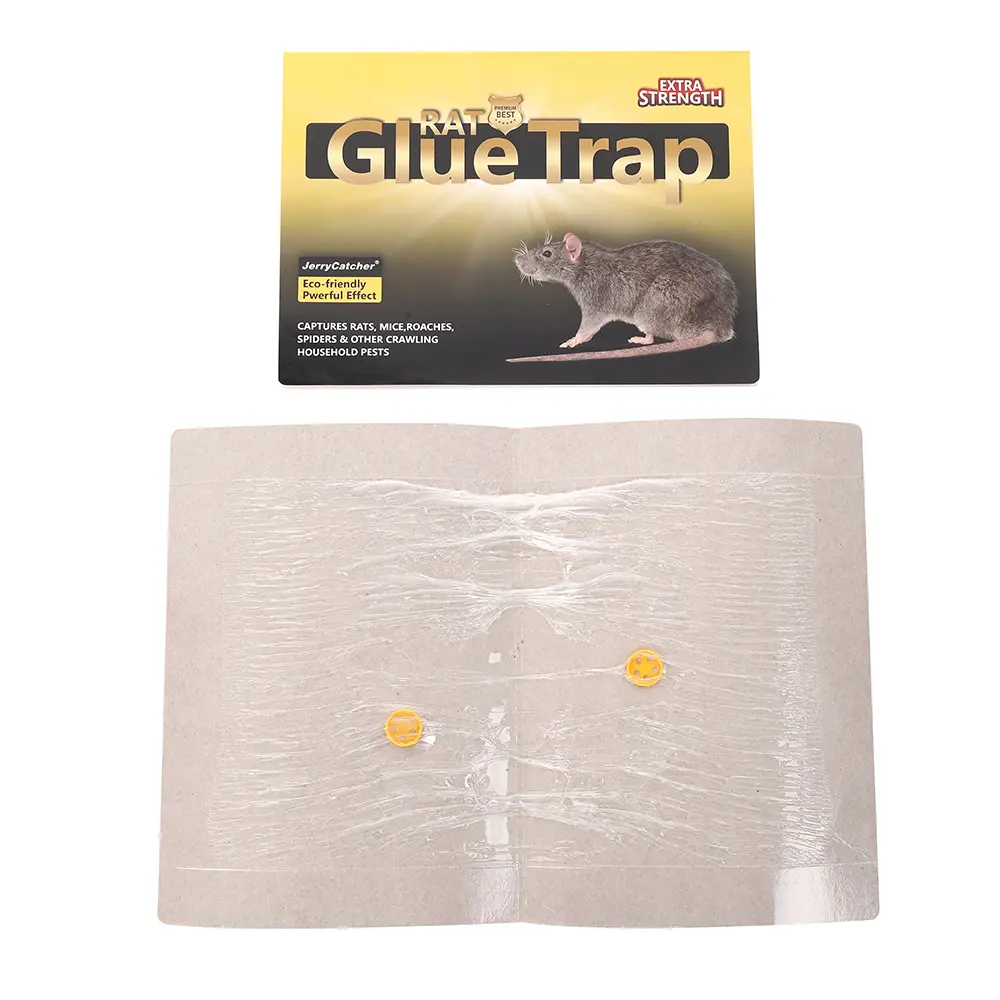
Mouse glue boards use an adhesive surface to restrain rodents that contact the board.
They have historically been used in some monitoring and pest control applications. However, current public health guidance varies by application and jurisdiction.
The CDC specifically advises against glue traps for household rodent control. It cites concerns related to rodent stress and potential disease exposure.
Businesses considering glue boards should therefore verify local requirements before purchase or deployment.
For markets where their use is permitted, buyers should still evaluate adhesive stability, board construction, storage conditions, inspection frequency, and non-target exposure.
How Should Businesses Compare Different Mouse Traps?
A professional comparison should look beyond capture claims.
Commercial buyers usually need to consider product performance, operational requirements, packaging, service frequency, and supply continuity.
A trap can perform well in laboratory conditions but still create problems when deployed in a dusty warehouse or high-traffic facility.
The table below provides a practical comparison framework.
Table 1. Comparison of common mouse trap types for commercial applications
| Trap Type | Capture Method | Main Strength | Main Consideration | Typical Buyer |
|---|---|---|---|---|
| Mouse snap trap | Mechanical | Targeted capture | Requires careful placement and inspection | Pest control companies |
| Mouse trap cage | Live capture | Contained capture format | Requires handling after capture | Selected commercial users |
| Mouse glue boards | Adhesive | Simple deployment | Use may face regulatory or welfare restrictions | Selected monitoring applications |
| Multi-catch trap | Repeated capture | Can support repeated captures | Requires regular servicing | Commercial pest operators |
| Electronic trap | Electronic mechanism | Enclosed operating format | Requires battery or power management | Selected facilities |
The table should not be treated as a universal ranking.
Instead, it provides a starting point for matching trap characteristics with operating requirements.
Evaluate the Target Species
Trap size matters.
A mouse trap designed for small mice should not automatically be used for larger rodents.
The trap should match the target species and follow the manufacturer’s specifications.
This distinction matters for distributors because customers may order traps for different pest species.
A product catalog should therefore make trap dimensions and target applications clear.
Evaluate the Environment
Environmental conditions can affect trap performance.
Dust may interfere with mechanical components. Moisture can damage certain materials or mechanisms. Extreme temperatures may affect adhesives or other materials.
Commercial buyers should review storage and operating requirements before ordering large quantities.
For example, a distributor serving agricultural customers may need different packaging and storage considerations than a retailer serving household customers.
Evaluate Inspection Requirements
Inspection frequency affects labor cost.
A trap that requires frequent manual checking may create more labor than a product designed for a different monitoring strategy.
This does not mean that less frequent inspection is always better. Some trap types require frequent inspection for safety, welfare, hygiene, or regulatory reasons.
The correct frequency should follow the product instructions and pest management program.
Where Should Mouse Traps Be Placed?
Trap placement can determine whether a product performs as intended.
Mice usually move through areas that provide cover. They often travel near walls, equipment, stored materials, and structural edges.
The CDC recommends placing traps where rodents have been seen or where evidence indicates rodent activity.
Look for Evidence Before Placement
Before placing traps, inspect the site.
Look for:
- Droppings
- Gnaw marks
- Damaged packaging
- Nesting material
- Food residue
- Grease marks
- Repeated sightings
- Openings around pipes or cables
This information can help identify active zones.
For example, a distribution warehouse may find droppings along the wall behind pallet racks. The pest management team can focus its monitoring effort on that route rather than distributing traps randomly across the entire floor.
Focus on Travel Routes
A trap should intersect a likely travel route.
Walls, corners, equipment edges, and storage boundaries can provide useful reference points.
However, placement should also account for workers and equipment.
A trap located directly beside a forklift route may create unnecessary exposure to damage or accidental contact.
Inspect Structural Entry Points
Traps address the presence of rodents, but they do not remove structural access points.
The CDC notes that mice can enter through gaps as small as about 1/4 inch, or 6 millimeters. It recommends identifying and sealing gaps around buildings.
Common entry points include:
- Door gaps
- Pipe penetrations
- Cable openings
- Ventilation areas
- Wall-floor joints
- Damaged screens
- Gaps around utility lines
A facility that only adds traps may continue to experience activity if new mice can enter.
What Makes a Mouse Trap Suitable for Commercial Use?
Commercial applications create requirements that may not matter for occasional household use.
A pest control company may need thousands of traps each month. A distributor may need consistent packaging across multiple shipments. A warehouse operator may need clear product identification and storage information.
These factors make product consistency important.
Construction and Materials
Buyers should review the material used for the trap body, trigger, adhesive board, spring, housing, or other components.
Material selection affects storage stability, handling, and product life.
The trap should also maintain its intended function during transportation and normal storage.
Product Dimensions
Dimensions influence placement and packaging.
A compact trap may fit behind equipment. A larger format may provide greater coverage or suit a different target.
For distributors, dimensions also affect carton quantities and shipping costs.
Packaging
Packaging protects the product before use.
For adhesive products, packaging must help prevent contamination and unintended exposure of the adhesive surface.
For mechanical traps, packaging should protect moving or sensitive components from damage during transportation.
Commercial buyers should request carton dimensions and unit quantities before calculating shipping requirements.
Labeling and Documentation
Product information should clearly identify the intended use, target species, storage requirements, and relevant warnings.
This information helps distributors communicate correctly with downstream customers.
For products subject to local regulation, buyers should also confirm whether additional registration, labeling, or documentation applies in the target market.
How Important Are Mouse Trap Placement and Inspection?
Placement and inspection are closely connected.
A trap that is correctly placed but never checked does not provide useful management data.
Commercial pest control programs often use inspection records to identify changes in activity.
For example, a warehouse may record activity at three monitoring points during the first week. Two points may show no activity, while one location repeatedly records signs.
The pest management team can then investigate that area.
The problem may relate to food storage, structural access, waste handling, or nearby nesting conditions.
Use a Monitoring Record
A simple record can include:
| Field | Example Information |
|---|---|
| Trap ID | M-015 |
| Location | Storage Area B |
| Installation Date | March 5 |
| Inspection Date | March 7 |
| Condition | Intact |
| Activity | Signs detected |
| Action | Area inspected |
| Next Check | March 9 |
Table 2. Example mouse trap inspection record for commercial facilities
The exact record should match the site’s pest management procedures.
Data becomes more useful when the facility uses consistent trap locations and identification numbers.
Replace Damaged Products
Damaged traps should not remain in service.
For adhesive products, contamination can affect the usable surface.
For mechanical traps, damage can affect the trigger or capture mechanism.
Replacement procedures should follow the product instructions and facility requirements.
What Factors Should Distributors Consider When Buying Wholesale Mouse Traps?
Wholesale purchasing requires a broader evaluation than individual product selection.
Distributors need consistent supply, clear specifications, predictable packaging, and manageable logistics.
A supplier may offer a low unit price, but that price has limited value if the product specifications change between shipments.
Businesses sourcing wholesale mouse traps should therefore review both product and supplier capabilities before placing a repeat order.
Product Consistency
Repeat customers expect the same basic product specifications.
For a distributor, changes in trap dimensions, materials, packaging, or adhesive configuration can create downstream problems.
Ask suppliers whether production follows controlled specifications and how product quality is checked.
Production Capacity
Wholesale buyers should evaluate whether the supplier can support expected order volumes.
A small trial order may not reveal supply limitations.
For recurring orders, buyers should discuss production schedules, lead times, minimum order quantities, and peak-season capacity.
Packaging Efficiency
Packaging affects warehousing and transportation.
Buyers should request:
- Units per inner box
- Units per carton
- Carton dimensions
- Gross weight
- Net weight
- Pallet configuration
- Shipping marks
- Custom labeling options
These details help importers calculate logistics costs before placing an order.
Private Label Requirements
Some distributors sell pest control products under their own brands.
In these cases, packaging customization may become part of the purchasing decision.
The buyer should clarify artwork requirements, minimum quantities, packaging materials, labeling languages, and approval procedures.
A factory with a clear customization process can make repeat orders easier to manage.
How Can Buyers Evaluate Mouse Trap Suppliers?
Supplier selection should include product, production, quality, logistics, and communication.
A factory that produces several trap types may provide more flexibility for distributors serving different customer groups.
Buyers comparing mouse trap suppliers should request technical information before discussing price alone.
Questions to Ask a Supplier
- What trap types do you manufacture?
- What target species does each model suit?
- What are the product dimensions?
- What materials does each model use?
- What packaging formats are available?
- What are the minimum order quantities?
- What quality checks apply during production?
- Can you support private-label packaging?
- What are the standard lead times?
- What export documents can you provide?
These questions can reduce uncertainty during supplier evaluation.
Sample Testing Before Bulk Orders
A sample order can help buyers evaluate product handling and packaging.
The buyer can check dimensions, construction, packaging quality, storage requirements, and deployment procedures.
For adhesive products, storage and adhesive condition should receive particular attention.
For mechanical traps, buyers can evaluate trigger consistency, construction, and handling.
Testing should follow appropriate safety procedures and applicable product instructions.
Which Mouse Traps Are Best for Food and Warehouse Applications?
Food and warehouse facilities require careful pest management because rodents can affect stored products, packaging, and sanitation.
The appropriate trap depends on the site’s pest management plan and applicable requirements.
In food-related facilities, businesses should consider contamination risks, employee access, sanitation procedures, inspection records, and regulatory requirements.
Warehouses
Warehouses often have large open areas with pallet racks and loading zones.
Mice may enter through loading doors or gaps around utilities.
Trap placement should focus on identified activity routes.
For example, a warehouse may identify repeated activity along one rack line. The facility can then investigate nearby packaging, food residues, structural openings, and storage conditions.
Food Processing Areas
Food processing facilities require stronger controls.
Pest control procedures should align with the facility’s food safety system.
Traps should not create contamination risks.
The facility should also maintain records showing where monitoring devices are located and when personnel inspect them.
Retail Storage Areas
Retail backrooms often contain cartons, food products, waste, and delivery materials.
These areas can provide shelter and food access.
Traps may form part of a broader monitoring plan.
The facility should also inspect incoming goods and packaging for evidence of rodent activity.
Do Glue Rat Traps Work Better Than Other Trap Types?
The answer depends on the application and regulatory environment.
A glue rat trap uses an adhesive surface rather than a mechanical trigger.
Adhesive products may be easy to deploy, but their use can face restrictions or welfare concerns.
The CDC currently advises against glue traps for household rodent control.
Therefore, businesses should not assume that glue products are automatically a better choice because they have fewer moving components.
The buyer should first confirm whether the product is permitted and appropriate for the intended application.
Where glue boards are legally and operationally acceptable, environmental conditions become important.
Dust, moisture, heat, and contamination can affect adhesive performance.
Storage conditions also matter before deployment.
What Common Mistakes Reduce Mouse Trap Performance?
Many trap problems come from incorrect application rather than defective products.
One common mistake is placing traps without identifying mouse activity.
Another is selecting a trap without considering the target species.
A third is ignoring environmental conditions.
A fourth is treating trapping as a substitute for sanitation and exclusion.
Mistake 1: Choosing by Price Alone
A low unit price does not necessarily mean a low total cost.
A buyer should consider product life, packaging, labor, shipping, storage, replacement requirements, and supply consistency.
Mistake 2: Ignoring Facility Traffic
A trap placed in a busy walkway may be moved or damaged.
It may also create unnecessary exposure to workers.
Trap placement should fit both pest behavior and facility operations.
Mistake 3: Using the Wrong Trap Size
A trap designed for mice should not automatically be used for larger rodents.
The product should match the intended target.
Mistake 4: Ignoring Entry Points
Trapping may reduce current activity but will not stop new rodents from entering.
The CDC recommends sealing holes and gaps as part of rodent prevention.
Mistake 5: Failing to Record Results
Without records, it becomes difficult to identify recurring activity.
A monitoring map and inspection log can provide useful evidence for corrective action.
How Does Integrated Pest Management Affect Trap Selection?
Trap selection works best within an integrated pest management approach.
Integrated pest management does not rely on one product.
Instead, it combines inspection, prevention, sanitation, exclusion, monitoring, and suitable control methods.
The EPA identifies prevention and other control options as part of rodent management.
For a commercial facility, this means the trap should answer a specific pest management need.
For example, a trap may monitor an active route. A sealing project may address an entry point. Sanitation may remove an accessible food source.
Each action addresses a different part of the problem.
A Practical IPM Sequence
A commercial facility can use the following general sequence:
- Inspect the property.
- Identify signs of rodent activity.
- Identify food, water, and shelter sources.
- Identify structural entry points.
- Select appropriate control methods.
- Place monitoring or control devices.
- Record inspection results.
- Correct underlying conditions.
- Review activity trends.
- Adjust the management plan.
The exact procedure should follow the site’s professional pest management program and applicable regulations.
How Should Businesses Calculate the Cost of Mouse Traps?
Purchase price is only one part of trap cost.
Commercial buyers should consider total cost across the purchasing and operating cycle.
A basic calculation can include:
Product cost + shipping + storage + labor + replacement cost + disposal cost
For example, a trap with a low purchase price may require more frequent replacement or more labor during inspection.
A slightly higher-priced product may reduce other costs if its design better matches the application.
However, buyers should rely on actual product specifications and operating data rather than assuming that higher price means better performance.
Cost Comparison Example
Consider a distributor ordering 10,000 traps.
Supplier A offers a lower unit price but uses larger cartons.
Supplier B has a slightly higher unit price but offers more compact packaging.
If Supplier B reduces shipping volume and warehouse space, the difference in unit price may not represent the difference in total purchasing cost.
This is why procurement teams should calculate landed cost.
FAQ About Choosing the Best Mouse Traps
What mouse traps work best?
There is no universal best trap. Mouse snap traps can suit targeted control, while cage traps and glue boards may suit specific applications. The choice depends on the site, target species, inspection requirements, regulations, and pest management plan.
Are mouse snap traps effective?
Snap traps can be effective when properly selected, positioned, and maintained. The CDC recommends traditional snap traps for reducing rodent populations.
Are mouse glue boards still recommended?
Guidance varies by location and application. The CDC currently advises against glue traps for household rodent control. Businesses should check local rules and professional pest management requirements before using them.
What is a mouse trap cage?
A mouse trap cage is a live-capture trap that contains the mouse after activation. Handling requirements apply after capture, and users should follow local regulations and professional procedures.
Where should mouse traps be placed?
Place traps where there is evidence of rodent activity or where rodents are likely to travel. Wall edges, corners, storage boundaries, and other protected routes can provide suitable locations.
How many mouse traps should a commercial facility use?
There is no universal number. The quantity depends on building size, activity level, monitoring strategy, layout, and the pest management plan.
Should businesses use more than one type of trap?
They may need different trap formats for different locations. A commercial pest management program can select products according to each site’s requirements.
What should I check before buying wholesale mouse traps?
Review product dimensions, materials, target species, packaging, storage conditions, shelf life, quality control, production capacity, lead time, and documentation.
What is more important, trap price or product performance?
Commercial buyers should evaluate total cost and application suitability. A low unit price has limited value if the product creates additional labor, storage, replacement, or logistics costs.
Can traps solve a mouse infestation by themselves?
Traps can help control or monitor existing activity, but they do not remove all causes of infestation. Businesses should also address food sources, sanitation, shelter, and structural entry points.
What Should Buyers Consider Before Placing a Bulk Mouse Trap Order?
A bulk order should begin with application analysis.
First, identify the main customer groups.
A distributor serving households may need compact retail packaging. A pest control company may need larger professional packs. A commercial facility may prioritize product consistency and inspection efficiency.
Second, identify the target species and trap formats.
Third, evaluate storage and logistics.
Fourth, test samples before placing a large order.
Finally, confirm the supplier’s production capacity and repeat-order process.
This process can reduce the risk of buying a product that looks suitable in a catalog but does not match the customer’s actual requirements.
A factory should also provide clear communication about product specifications.
This becomes especially important when buyers request customized packaging or private-label products.
A Practical Checklist for Choosing Mouse Traps
Before selecting a product, commercial buyers can use this checklist:
- Identify the target rodent.
- Inspect the facility.
- Identify active travel routes.
- Check local regulations.
- Define the intended trap function.
- Select the appropriate trap type.
- Confirm product dimensions.
- Review construction materials.
- Check storage conditions.
- Review packaging specifications.
- Request samples.
- Test product handling.
- Confirm wholesale quantities.
- Evaluate supplier capacity.
- Calculate landed cost.
- Confirm documentation.
- Establish a repeat-order process.
This approach gives procurement teams a structured basis for comparing products.
It also reduces the risk of choosing a trap simply because its purchase price looks attractive.
About Lanxi Puyoung
Lanxi Puyoung is a mouse trap factory supplying pest control products for distributors, pest management companies, commercial users, and other business customers. The company provides different trap formats for customers evaluating products according to target species, application conditions, packaging requirements, and purchasing volume.
As a factory, Lanxi Puyoung focuses on product manufacturing, specification control, packaging, and wholesale supply. Customers can discuss product dimensions, trap formats, packaging requirements, and order quantities before selecting a suitable solution.
For buyers comparing mice trap products, the most useful question is not simply which trap catches the most mice. The better question is which trap fits the target environment, pest management process, inspection requirements, local regulations, and total operating cost.
For distributors and commercial buyers, supplier capability also matters. Consistent specifications, stable production, suitable packaging, and clear technical communication can influence the success of repeat purchasing.
References
- U.S. Centers for Disease Control and Prevention, “How to Trap Up to Remove Rodents.”
CDC: How to Trap Up to Remove Rodents - U.S. Centers for Disease Control and Prevention, “Controlling Wild Rodent Infestations.”
CDC: Controlling Wild Rodent Infestations - U.S. Centers for Disease Control and Prevention, “How to Seal Up to Prevent Rodents.”
CDC: How to Seal Up to Prevent Rodents - U.S. Environmental Protection Agency, “Options for Dealing With Rodent Infestations.”
EPA: Options for Dealing With Rodent Infestations - U.S. Environmental Protection Agency, “Controlling Rodents and Regulating Rodenticides.”
EPA: Controlling Rodents and Regulating Rodenticides