How Does a Die Cutting Machine Work in Mouse Glue Board Production?
September 18, 2026
For importers, wholesalers, distributors, pest control suppliers, and private-label brands, a mouse glue board may look like a simple product.
However, before a finished mouse glue board is coated with sticky adhesive and packed for shipment, the paperboard needs to go through several important manufacturing processes.
One of these processes is die cutting.
At Lanxi Puyoung Commodity Co., Ltd., die cutting is used to convert prepared paperboard sheets into the required size, shape, and structure for mouse glue board production.
So, how does a die cutting machine work, and why does this process matter for the final mouse glue board?
This article takes you inside the production process.
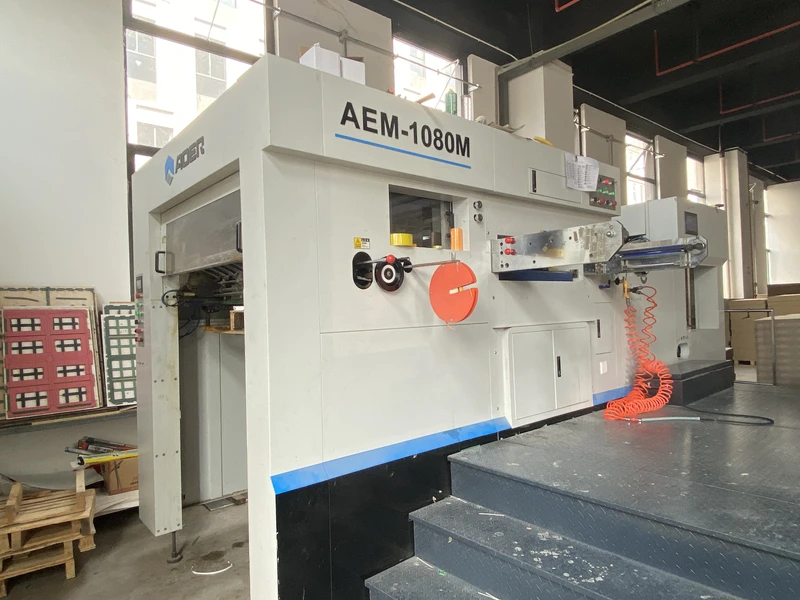
What Is a Die Cutting Machine?
A die cutting machine is industrial equipment used to cut and crease paperboard according to a predetermined die and product design.
In mouse glue board manufacturing, large prepared paperboard sheets cannot normally go directly to the glue coating process. They first need to be converted into the dimensions and structure required for the finished product.
Depending on the mouse glue board design, die cutting can help determine:
- Board dimensions
- Product shape
- Cutting edges
- Creasing positions
- Folding structure
- Finished product consistency
- Subsequent glue coating accuracy
For this reason, die cutting is an important converting process between board preparation and later mouse glue board manufacturing.
The basic process can be summarized as:
Prepared Paperboard → Paper Feeding → Positioning → Die Cutting → Creasing → Board Separation → Inspection → Finished Die-Cut Board
After die cutting, the prepared board can continue to the subsequent glue coating and packaging processes.
How Does the Die Cutting Machine Work?
Step 1: Prepare the Paperboard
The process starts with preparing the paperboard according to the confirmed mouse glue board specification.
Before entering the die cutting machine, the board may already have completed upstream processes such as printing and paper lamination.
Different mouse glue board designs may require different:
- Dimensions
- Board weights
- Thicknesses
- Printed artwork
- Folding structures
- Surface designs
Before production begins, these specifications should be checked against the confirmed order requirements.
For OEM and Private Label orders, the die-cutting structure can also be prepared according to the customer’s required product design.
Step 2: Prepare the Die
The die is one of the most important parts of the die cutting process.
It determines where the paperboard will be cut and where creasing lines will be formed.
Different mouse glue board sizes and structures may therefore require different die designs.
The die needs to match the required:
- Product dimensions
- Outer shape
- Cutting positions
- Creasing positions
- Folding structure
For customized products, the die can be prepared according to the confirmed product specifications.
This allows the production line to manufacture different mouse glue board sizes and designs for different markets.
Step 3: Feed the Paperboard into the Machine
Once the paperboard and die are ready, the board is fed into the die cutting machine.
Stable feeding is important for accurate processing.
If the sheet enters the machine in an unstable or incorrect position, the cutting and creasing positions may shift.
This can affect:
- Finished dimensions
- Edge alignment
- Folding position
- Printed artwork position
- Subsequent glue application
- Product appearance
For large-volume production, consistent feeding also helps maintain stable product specifications from one batch to another.
Step 4: Position the Paperboard
Before cutting, the paperboard needs to be positioned correctly relative to the die.
Accurate positioning is particularly important for printed mouse glue boards.
For example, if a board contains printed logos, product instructions, warning information, patterns, or brand artwork, the die-cutting position needs to match the printed design.
Good positioning helps ensure:
- Consistent board dimensions
- Cleaner finished edges
- Correct printing position
- Accurate folding lines
- Better finished appearance
- More stable bulk production
This is why positioning is an important part of the die cutting process.
Step 5: Die Cut the Paperboard
The paperboard then enters the main die cutting stage.
The machine applies pressure between the die and the paperboard, allowing the cutting rules in the die to cut the board according to the required shape.
This is the core function of the machine.
A large paperboard sheet can therefore be converted into individual mouse glue board blanks with predetermined dimensions.
For example, different markets may require mouse glue boards in different sizes.
Instead of relying on manual cutting, die cutting provides a more standardized way to produce the required dimensions during bulk manufacturing.
Step 6: Create the Creasing Lines
Die cutting is not only about cutting the outer shape.
For foldable mouse glue boards, creasing is also an important part of the process.
Creasing creates predetermined folding lines in the board.
These lines allow the finished mouse glue board to be folded more easily according to its intended design.
Proper creasing can affect:
- Folding accuracy
- Folding convenience
- Product structure
- Board appearance
- Packaging
- End-user experience
If the crease is incorrectly positioned or inconsistent, the finished board may not fold according to the intended design.
For this reason, cutting and creasing need to work together.
Step 7: Separate and Inspect the Die-Cut Boards
After die cutting, the finished board pieces need to be separated and checked before entering the next production stage.
Inspection may focus on:
- Board dimensions
- Cutting accuracy
- Edge condition
- Creasing position
- Folding performance
- Printing alignment
- Board flatness
- Overall appearance
The purpose is to make sure that the prepared boards meet the required specifications before glue coating.
This helps reduce unnecessary problems during subsequent manufacturing.
What Happens After Die Cutting?
Once the boards have been cut and creased into the required structure, they can move into the later mouse glue board manufacturing process.
A simplified production flow can be understood as:
Paper Materials → Printing → Paper Lamination → Die Cutting & Creasing → Mouse Glue Application → Inspection → Packing → Finished Mouse Glue Board
Die cutting therefore acts as an important connection between paperboard preparation and glue coating.
The laminating process prepares the structural board.
The die cutting process gives the board its required size and shape.
The glue coating process then applies the sticky adhesive used to physically trap rodents.
Together, these processes gradually turn basic paper materials into a finished mouse glue board.
Why Is Die Cutting Important for Mouse Glue Board Quality?
For professional buyers, mouse glue board quality should not be evaluated only by adhesive strength.
The dimensions, structure, cutting quality, and folding performance of the board can also affect the final product.
1. Dimensional Accuracy
The finished board should match the confirmed product specification.
Accurate die cutting helps maintain consistent dimensions during bulk production.
This becomes particularly important when thousands or tens of thousands of pieces are produced for one order.
2. Clean Cutting Edges
The condition of the board edges affects the overall appearance of the finished product.
Stable die cutting helps produce cleaner and more consistent edges compared with uncontrolled cutting.
This can contribute to a more professional finished product.
3. Creasing and Folding Performance
For foldable mouse glue boards, the position and quality of the crease directly affect how the product folds.
A stable crease helps the board form the intended structure during packing and use.
4. Printing Alignment
Many mouse glue boards include printed brand names, patterns, instructions, and other artwork.
The die cutting position needs to coordinate with the printed design so that the final product maintains the intended appearance.
5. Glue Coating Compatibility
After die cutting, the board usually continues to the glue coating stage.
Consistent dimensions and structures help make subsequent glue application easier to control.
If board dimensions vary excessively, it may create difficulties during later production.
6. Bulk Production Consistency
For B2B orders, consistency is particularly important.
An importer may order tens of thousands of mouse glue boards at one time.
Stable die cutting helps ensure that products within the same production batch maintain more consistent:
- Sizes
- Shapes
- Folding lines
- Edge conditions
- Product structures
This is an important part of mass-production quality control.
How Does Die Cutting Support Different Mouse Glue Board Designs?
Different overseas markets do not always require the same mouse glue board.
Some customers prefer smaller and lighter boards, while others require larger and heavier products.
Different buyers may also request different:
- Board dimensions
- Total weights
- Glue weights
- Folding structures
- Printed artwork
- Brand logos
- Packaging styles
Because die cutting determines the physical dimensions and structure of the board, different dies can be prepared according to different product requirements.
This provides greater flexibility when developing products for different markets.
For OEM projects, buyers can provide existing samples, dimensions, product drawings, or other references for discussion.
Paper Laminating Machine + Die Cutting Machine + Glue Coating Machine
These three machines perform different but connected functions in mouse glue board production.
Paper Laminating Machine
The paper laminating machine combines the required paper materials to prepare the structural board.
Die Cutting Machine
The die cutting machine cuts and creases the prepared board into the required size and structure.
Glue Coating Machine
The glue coating machine applies the sticky mouse-trapping adhesive onto the prepared board.
The complete production logic can therefore be understood as:
- Paper Materials
- Paper Laminating Machine
- Laminated Paperboard
- Die Cutting Machine
- Cutting & Creasing
- Prepared Mouse Glue Board Blank
- Glue Coating Machine
- Mouse-Trapping Adhesive Applied
- Inspection & Packaging
- Finished Mouse Glue Board
Each machine performs a different function, but the stability of each stage can influence the consistency of the final product.
Why Does In-House Die Cutting Matter for B2B Buyers?
For importers, wholesalers, and distributors, understanding how a supplier manufactures its products can be just as important as comparing quotations.
In-house production capabilities can give a manufacturer greater control over:
- Product dimensions
- Cutting accuracy
- Creasing structure
- Product consistency
- OEM specifications
- Production schedules
- Quality inspection
- Bulk production
It can also make product development more flexible when customers require their own specifications.
Instead of choosing only from fixed finished products, buyers can discuss product requirements from the manufacturing stage.
Can Mouse Glue Boards Be Customized?
Yes.
For OEM and Private Label projects, different product specifications can be discussed according to actual order requirements.
Customization options may include:
- Board size
- Total product weight
- Glue weight
- Board structure
- Surface printing
- Customer logo
- Brand artwork
- Adhesive fragrance
- Retail packaging
- Master carton printing
If buyers already have mouse glue boards selling well in their local markets, they can also provide existing samples, dimensions, weights, artwork, or packaging references for product development.
What Should Buyers Confirm Before Requesting a Quotation?
Instead of asking only:
“How much is your mouse glue board?”
Professional buyers can provide more complete information, such as:
- Product: Mouse Glue Board
- Size: Required dimensions
- Total Weight: Required weight
- Glue Weight: Required adhesive quantity
- Quantity: Estimated order quantity
- Board Design: Standard / Customized
- Packaging: Standard / Customized
- Brand: JerryCatcher / Private Label
- Destination Market: Country / Region
- OEM: Yes / No
For example:
“We need a 21 × 16 cm mouse glue board with our own logo and retail packaging. Please recommend a suitable board and glue specification and provide your OEM quotation.”
Providing complete information helps the manufacturer recommend a more suitable product configuration and prepare a more accurate quotation.
Frequently Asked Questions
What Does a Die Cutting Machine Do in Mouse Glue Board Production?
It cuts and creases prepared paperboard according to the required product dimensions and structure before the board enters later glue coating and packaging processes.
Is Die Cutting the Same as Paper Lamination?
No.
Paper lamination combines different paper materials to prepare the structural board.
Die cutting is a subsequent converting process that cuts and creases the prepared board into the required product shape and dimensions.
Is Die Cutting the Same as Glue Coating?
No.
Die cutting determines the physical shape and folding structure of the mouse glue board.
Glue coating is a later process that applies the sticky adhesive used to physically trap rodents.
Why Is Die Cutting Accuracy Important?
Cutting and creasing accuracy can influence finished dimensions, folding performance, printing alignment, glue application, product appearance, and bulk production consistency.
Can Different Mouse Glue Board Sizes Be Produced?
Yes.
Different board dimensions and structures can be discussed according to actual product and OEM requirements.
Can We Use Our Own Brand?
Yes.
OEM and Private Label services are available. Logo, artwork, board specifications, adhesive requirements, and packaging can be discussed according to the project.
Looking for a Mouse Glue Board Manufacturer?
A mouse glue board may appear simple, but behind the finished product is a complete manufacturing process.
From paper preparation and lamination to die cutting, creasing, glue application, inspection, and packaging, each stage contributes to the consistency of the final product.
The die cutting machine plays an important role in this process by converting prepared paperboard into accurately sized and structured mouse glue board blanks before adhesive application.
For B2B buyers, understanding these production processes can help when evaluating a long-term supplier—not only by unit price, but also by manufacturing capability, product consistency, customization support, and bulk production capacity.
Lanxi Puyoung Commodity Co., Ltd. | JerryCatcher
Mouse Glue Board Manufacturer | Wholesale | OEM & Private Label