How Does a Flute Laminating Machine Work in Mouse Glue Board Production?
October 8, 2026
For importers, wholesalers, distributors, pest control suppliers, and private-label brands, a mouse glue board may look like a simple pest control product.
However, behind a stable and reliable finished product is a complete manufacturing process involving material preparation, board converting, adhesive application, inspection, and packaging.
For mouse glue board designs that use a corrugated board structure, one important upstream process is flute lamination.
A flute laminating machine is used to bond printed surface paper with corrugated board, creating a combined board structure with the required appearance, thickness, and rigidity.
So, how does a flute laminating machine work, and what role can it play in mouse glue board production?
This article takes you inside the manufacturing process.
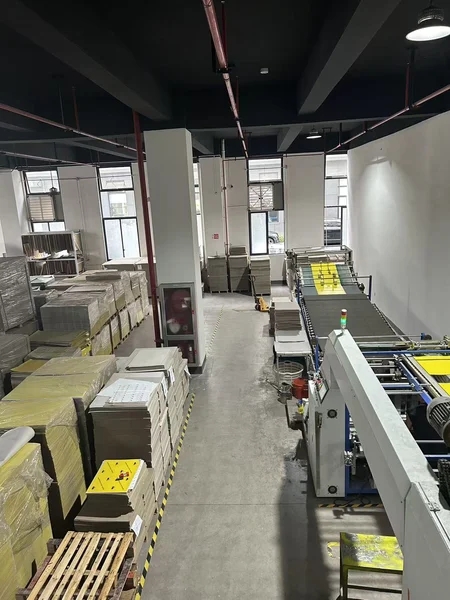
What Is a Flute Laminating Machine?
A Flute Laminating Machine is industrial equipment designed to laminate a printed top sheet or other paper material onto corrugated board.
Unlike film lamination, which applies a thin plastic film to the surface of paper, flute lamination combines paper-based materials with corrugated board to create a stronger board structure.
The basic structure can be understood as:
Printed Top Sheet + Laminating Adhesive + Corrugated Board → Laminated Corrugated Board
For products requiring this type of board structure, flute lamination can influence:
- Board rigidity
- Board thickness
- Flatness
- Layer bonding
- Printing appearance
- Cutting and die-cutting performance
- Folding performance
- Finished product consistency
For this reason, flute lamination should not be viewed simply as “gluing two sheets together.”
It is an upstream board-preparation process that can influence several later manufacturing stages.
The basic process can be summarized as:
Material Preparation → Paper Feeding → Adhesive Application → Alignment → Lamination → Pressing → Drying/Setting → Finished Laminated Board
How Does the Flute Laminating Machine Work?
Step 1: Prepare the Surface Paper and Corrugated Board
The process begins with preparing the required materials.
Typically, flute lamination involves two main components:
Top Sheet:
Printed paper, coated paper, or another surface paper carrying the required artwork and product information.
Corrugated Board:
The structural layer that provides thickness and support.
Before production starts, the materials should be checked according to the confirmed product specifications.
Important factors may include:
- Paper dimensions
- Paper weight
- Corrugated board type
- Board thickness
- Surface condition
- Printing requirements
- Color
- Target finished dimensions
- Target board structure
For OEM orders, these specifications can be discussed according to the customer’s product requirements.
Step 2: Feed the Materials into the Machine
After preparation, the surface paper and corrugated board are fed into the flute laminating machine.
Stable feeding is important because the two materials need to enter the production system at the correct speed and position.
If feeding is unstable, it may cause problems such as:
- Misalignment
- Uneven edges
- Printing position deviation
- Poor lamination
- Inconsistent finished dimensions
For large-volume production, stable feeding also helps improve production efficiency and batch consistency.
Step 3: Apply the Laminating Adhesive
The next stage is adhesive application.
A controlled amount of laminating adhesive is applied between the surface paper and corrugated board so that the two materials can be bonded together.
It is important to distinguish this adhesive from the sticky glue used later for trapping rodents.
Laminating adhesive: bonds the paper materials together.
Mouse-trapping adhesive: forms the sticky surface used to physically capture rodents.
These are two completely different functions.
During flute lamination, adhesive application needs to be reasonably controlled.
Uneven or inappropriate application may affect:
- Bonding strength
- Board flatness
- Surface appearance
- Drying
- Subsequent die cutting
- Finished product consistency
Step 4: Align the Surface Paper and Corrugated Board
Once the adhesive has been applied, the surface paper needs to be accurately aligned with the corrugated board.
This is particularly important when the surface paper has already been printed.
For example, the top sheet may contain:
- Brand logo
- Product name
- Usage instructions
- Warning information
- Product graphics
- Decorative patterns
- Customer artwork
The printing position needs to correspond correctly with the final cutting and forming structure.
Good alignment helps achieve:
- Cleaner edges
- Correct printing position
- More consistent dimensions
- Better finished appearance
- Easier subsequent die cutting
- More stable bulk production
For private-label products, alignment becomes especially important because the customer’s artwork is part of the final retail appearance.
Step 5: Laminate the Two Materials Together
The prepared surface paper and corrugated board then enter the main laminating section.
This is the core function of the flute laminating machine.
Through controlled feeding, adhesive application, alignment, and pressure, the two separate materials gradually become one combined board structure.
The basic principle is:
- Printed Surface Paper + Corrugated Board
- Flute Lamination
- Combined Corrugated Board
The surface paper provides the printed appearance, while the corrugated layer provides structural support.
Together, they form the board material required for subsequent processing.
Step 6: Press the Laminated Board
After the two materials are combined, pressure is applied to improve contact between the layers.
Proper pressing helps the adhesive distribute and bond more consistently.
This stage can affect the board’s:
- Flatness
- Bonding consistency
- Structural stability
- Surface appearance
- Subsequent converting performance
For later production, reasonably stable and flat board material is important.
If the laminated board is excessively warped, poorly bonded, or uneven, it may create difficulties during die cutting, creasing, folding, or other subsequent processes.
Step 7: Allow the Laminated Board to Set
After lamination and pressing, the bonded board needs sufficient time or appropriate processing conditions to stabilize.
This allows the adhesive between the layers to develop suitable bonding before the board enters the next production stage.
If the board is processed too early, it may increase the possibility of:
- Layer separation
- Warping
- Cutting problems
- Creasing problems
- Surface defects
- Dimensional instability
For this reason, flute lamination should be considered part of the complete board preparation process rather than an isolated operation.
What Happens After Flute Lamination?
Once the laminated board is sufficiently stable, it can move into subsequent converting processes.
Depending on the selected product design, the production flow may include:
- Surface Paper + Corrugated Board
- Flute Laminating
- Laminated Corrugated Board
- Die Cutting
- Creasing / Forming
- Subsequent Product Processing
- Inspection
- Packing
For applicable mouse glue board structures, further processes may also include mouse-trapping adhesive application.
The flute laminating machine therefore works primarily as an upstream board-preparation machine.
It prepares the structural material before cutting, forming, and other later manufacturing stages.
Why Is Flute Lamination Important for Board Quality?
For professional B2B buyers, the quality of a finished product should not be evaluated only by its visible surface.
The structure underneath also matters.
Several factors in flute lamination can influence the quality and consistency of the finished board.
1. Board Flatness
A relatively flat laminated board provides better conditions for subsequent die cutting, creasing, forming, and other manufacturing processes.
Excessive warping may affect both production efficiency and finished appearance.
2. Layer Bonding
The surface paper and corrugated board should remain properly bonded.
Poor bonding may lead to separation during:
- Die cutting
- Folding
- Packing
- Transportation
- Storage
- Normal handling
Stable bonding therefore contributes to the structural integrity of the finished board.
3. Structural Strength
One of the main purposes of using corrugated board is to provide structural support.
Different corrugated structures can offer different levels of thickness and rigidity.
The selected board structure should therefore match the intended finished product.
4. Printing Appearance
The printed top sheet forms the visible surface of the laminated board.
Good alignment and lamination help maintain a cleaner and more consistent appearance.
This becomes especially important for OEM and Private Label orders.
5. Die Cutting Performance
Flute lamination and die cutting are closely connected.
After lamination, the board often needs to be cut and creased according to the required product dimensions and structure.
Stable laminated board helps create better conditions for accurate die cutting.
6. Product Consistency
For wholesale orders involving thousands or tens of thousands of pieces, consistency is particularly important.
Stable flute lamination can help maintain more consistent:
- Board structures
- Dimensions
- Surface appearance
- Layer bonding
- Converting performance
This is an important consideration for bulk production.
How Does Flute Lamination Support Different Product Designs?
Different overseas markets may require different product specifications.
Buyers may have different requirements for:
- Board dimensions
- Board thickness
- Board rigidity
- Corrugated structure
- Surface printing
- Brand artwork
- Folding structure
- Packaging
Because flute lamination is an upstream board-preparation process, different combinations of surface paper and corrugated board can be discussed according to the required finished product.
For OEM development, buyers can also provide existing samples, dimensions, artwork, or other product references.
This allows the manufacturer to evaluate the required board structure before mass production.
Flute Laminating Machine + Die Cutting Machine
In board converting, the flute laminating machine and die cutting machine perform two different but closely connected jobs.
Flute Laminating Machine
The flute laminating machine combines the surface paper and corrugated board to create the required board structure.
Die Cutting Machine
The die cutting machine processes the prepared laminated board into the required dimensions, shape, and creasing structure.
The production logic can therefore be understood as:
- Surface Paper + Corrugated Board
- Flute Laminating Machine
- Laminated Corrugated Board
- Die Cutting Machine
- Cutting & Creasing
- Formed Board
- Subsequent Processing
- Inspection & Packaging
The flute laminating machine prepares the material.
The die cutting machine gives that material its final physical shape and structure.
Together, they form an important part of the board converting process.
Flute Laminating Machine vs. Paper Laminating Machine
These two terms can sometimes cause confusion.
The main difference is the material being laminated.
Paper Laminating Machine
Generally refers to equipment used to combine paper or paperboard layers.
Flute Laminating Machine
More specifically refers to equipment used to laminate a surface paper sheet onto corrugated board.
In simple terms:
Paper Laminating = Paper + Paper/Board
Flute Laminating = Printed Top Sheet + Corrugated Board
For buyers, understanding this difference helps clarify how different board structures are manufactured.
Why Does In-House Production Matter for B2B Buyers?
For importers, wholesalers, and distributors, understanding a supplier’s manufacturing process can be just as important as comparing quotations.
A manufacturer with its own board converting capabilities can have greater control over:
- Material specifications
- Board structure
- Production consistency
- Printing alignment
- Die cutting compatibility
- OEM development
- Quality inspection
- Bulk production schedules
This can also provide greater flexibility when developing customized products.
Instead of selecting only from existing finished products, buyers can discuss requirements from the material and manufacturing stages.
Can Product Specifications Be Customized?
For OEM and Private Label projects, different product details can be discussed according to actual order requirements.
Depending on the product structure, customization may include:
- Board dimensions
- Paper weight
- Board thickness
- Surface design
- Printing
- Customer logo
- Brand artwork
- Folding structure
- Retail packaging
- Master carton printing
For mouse glue board projects, other specifications such as total product weight, glue weight, and adhesive requirements can also be discussed according to the required finished product.
If buyers already have products selling well in their local markets, they can provide samples or specification references for evaluation.
What Should Buyers Confirm Before Requesting a Quotation?
For a mouse glue board project, instead of asking only:
“How much is your mouse glue board?”
Professional buyers can provide more complete information, such as:
- Product: Mouse Glue Board
- Size: Required dimensions
- Total Weight: Required weight
- Glue Weight: Required adhesive quantity
- Quantity: Estimated order quantity
- Board Structure: Required specification
- Surface Design: Standard / Customized
- Packaging: Standard / Customized
- Brand: JerryCatcher / Private Label
- Destination Market: Country / Region
- OEM: Yes / No
Providing complete information helps the manufacturer evaluate the required board structure and recommend a more suitable product configuration.
Frequently Asked Questions
What Does a Flute Laminating Machine Do?
It laminates a surface paper sheet onto corrugated board to create a combined board structure for subsequent converting processes.
Is Flute Lamination the Same as Film Lamination?
No.
Flute lamination combines paper with corrugated board.
Film lamination normally applies a thin plastic film to a printed paper surface for protection or appearance.
Is a Flute Laminating Machine the Same as a Die Cutting Machine?
No.
A flute laminating machine prepares the laminated board structure.
A die cutting machine subsequently cuts and creases the prepared board into the required dimensions and shape.
Why Is Alignment Important?
Accurate alignment helps ensure that the printed surface corresponds correctly with the board edges and subsequent die-cutting positions.
Can Different Board Structures Be Produced?
Different paper weights, dimensions, printing designs, corrugated structures, and other specifications can be discussed according to actual product requirements.
Can We Use Our Own Brand?
Yes.
OEM and Private Label projects can include customized logos, artwork, board specifications, and packaging according to the order requirements.
Looking for a Mouse Glue Board Manufacturer?
A mouse glue board may appear simple, but behind a finished product is a complete manufacturing process.
From material preparation and board lamination to die cutting, glue application, inspection, and packaging, each stage can influence the consistency of the finished product.
For products using an applicable corrugated board structure, the flute laminating process helps prepare the board material before it enters subsequent converting and production stages.
For B2B buyers, understanding these manufacturing processes can help when evaluating a long-term supplier—not only by unit price, but also by manufacturing capability, material control, product consistency, customization support, and bulk production capacity.
Lanxi Puyoung Commodity Co., Ltd. | JerryCatcher
Mouse Glue Board Manufacturer | Wholesale | OEM & Private Label