What Attracts Mice to Mouse Traps, and How Should B2B Buyers Choose the Right Trap?
September 23, 2026
Mice are attracted to mouse traps by a combination of food odors, nesting materials, shelter, familiar travel routes, and access to water. A successful trapping program does not depend on bait alone. Trap design, placement, environmental conditions, and the availability of competing food sources can all affect results. For B2B buyers, these factors matter when selecting products for pest control distributors, property management companies, food facilities, warehouses, farms, and commercial buildings.
Mice usually investigate areas that provide food, water, cover, and a safe route through the environment. They often travel close to walls, equipment, stored goods, and other objects. The CDC recommends placing traps where signs of rodent activity appear, including areas with droppings, gnaw marks, nesting material, and damaged food.
This behavior explains why a trap can perform differently in two locations. A trap placed beside an active runway may attract a mouse without much bait. Another trap placed in an open area may receive little attention even with an appealing bait. Commercial buyers should therefore evaluate the entire trapping environment rather than focusing only on bait strength.
For manufacturers and distributors, this distinction also affects product selection. A reusable snap trap may suit repeated professional deployment. A glue board can provide a ready-to-use option for specific environments. A cage trap may fit programs that require live capture. Each design responds to different operational requirements.
What Naturally Attracts Mice Before They Reach a Trap?
Mice do not enter a building simply because a trap contains food. The surrounding environment usually creates the original attraction. A trap works within that existing behavioral pattern.
Food remains one of the strongest attractants. Mice can feed on grains, seeds, pet food, crumbs, stored food, and other accessible materials. The smell of food can guide mice toward kitchens, warehouses, food storage areas, agricultural buildings, and waste collection points.
Water also influences rodent activity. Leaking pipes, condensation, drains, pet water, and other moisture sources can make an area more suitable for mice.
Shelter adds another layer. Mice prefer locations that provide cover from people and predators. Stored cartons, insulation, wall voids, equipment spaces, and clutter can create nesting opportunities.
The CDC recommends removing food, water, and shelter sources as part of rodent prevention. It also advises sealing gaps and keeping food and garbage securely contained.
Food Odors and Bait Selection
Bait works because it adds an attractive food cue to a location where the mouse already travels.
Common bait choices include peanut butter, seeds, nuts, grains, and other food materials. The CDC specifically identifies peanut butter as an example of bait that can be used with traps.
However, commercial trapping programs should not assume that one bait works equally well everywhere. A warehouse storing grain may already contain stronger food odors. A restaurant kitchen may contain grease and food residues. A residential building may contain pet food.
The more competing food available, the more important trap placement becomes. The goal is not simply to create the strongest smell. The goal is to position the trap where the mouse naturally travels.
Nesting Materials Can Influence Movement
Food is only one part of the attraction. Mice also seek materials that support nesting.
Paper, cardboard, fabric, insulation, shredded materials, and other soft materials can become nesting resources. Buildings with large quantities of these materials can therefore provide both food and shelter.
This point matters for commercial properties. A distribution center may have extensive packaging materials but little exposed food. A textile warehouse may provide abundant nesting material. An agricultural building may provide both feed and shelter.
A trap supplier should therefore understand the application before recommending a product configuration.
Where Do Mice Usually Encounter Traps?
Placement often determines whether a trap becomes part of a mouse’s normal route. Mice commonly move along walls and other objects because these areas provide cover.
The CDC specifically notes that rodents prefer to run next to walls or other objects for safety. It recommends placing traps in areas with evidence of activity and near locations where rodents may enter or shelter.
For commercial applications, common monitoring points include:
- Along walls and baseboards
- Behind appliances and equipment
- Near storage areas
- Around doors and entry points
- Near utility penetrations
- Behind cabinets
- Near food storage areas
- In attics, basements, and crawlspaces
- Around warehouses and loading areas
The exact placement should follow the product instructions and local pest management requirements. The main principle remains consistent: place the trap where mouse movement already occurs.
Why Wall Placement Matters
An open floor can look like an obvious place for a trap. It may not be an obvious route for a mouse.
Mice often use edges and protected pathways. A trap placed beside a wall can therefore intercept movement more naturally than one placed in the center of a room.
For B2B buyers, this behavior has implications for product design. Compact traps can fit behind equipment or inside narrow service areas. Larger traps may require more clearance.
The physical dimensions of the trap should match the expected deployment environment.
Entry Points Create High-Value Trap Locations
Mice can enter through surprisingly small openings. The CDC states that mice can fit through holes around 1/4 inch, or approximately 6 millimeters, in diameter.
That makes doors, utility lines, pipes, vents, wall penetrations, and structural gaps important inspection points.
A trap placed near an entry route can intercept activity before mice spread deeper into a building. At the same time, sealing entry points remains an important part of long-term rodent management.
Traps and exclusion work together. A trap addresses current activity, while sealing reduces future access.
Which Trap Designs Match Different Mouse Behaviors?
Trap selection should reflect the environment, service model, and handling requirements. Snap traps, glue boards, and cage traps each have different operating characteristics.
EPA guidance identifies lethal traps such as snap traps and live traps as options for managing mouse infestations. It also recognizes glue boards as physical pest control devices.
Mouse Snap Traps
Snap traps use a mechanical trigger to capture and kill mice. They remain widely used because the mechanism is straightforward and the trap can often be reset.
For professional users, the trigger design matters. A sensitive trigger can respond to mouse interaction, while the bait platform should provide enough space for the intended bait.
The housing also affects handling. Commercial users may prefer designs that simplify setting, inspection, disposal, and resetting.
For buyers comparing mouse snap traps, useful specifications include trap dimensions, material, trigger design, spring strength, bait area, reset mechanism, and packaging.
A distributor may also need several sizes or configurations for different applications. Residential pest control and industrial warehouse programs rarely have identical placement requirements.
Mouse Glue Boards
Glue boards use an adhesive surface to capture mice when they contact the board. They can provide a ready-to-deploy solution without a mechanical trigger.
The adhesive formulation becomes a key specification. Temperature, dust, humidity, and storage conditions can affect adhesive performance.
EPA materials note that glue boards can lose effectiveness under conditions such as dampness, dust, and temperature extremes.
For buyers sourcing mouse glue board, specifications should include board dimensions, adhesive coverage, adhesive formulation, backing material, release paper, packaging, and storage conditions.
Some glue boards include attractants. Others rely mainly on placement and mouse movement. The appropriate configuration depends on the application.
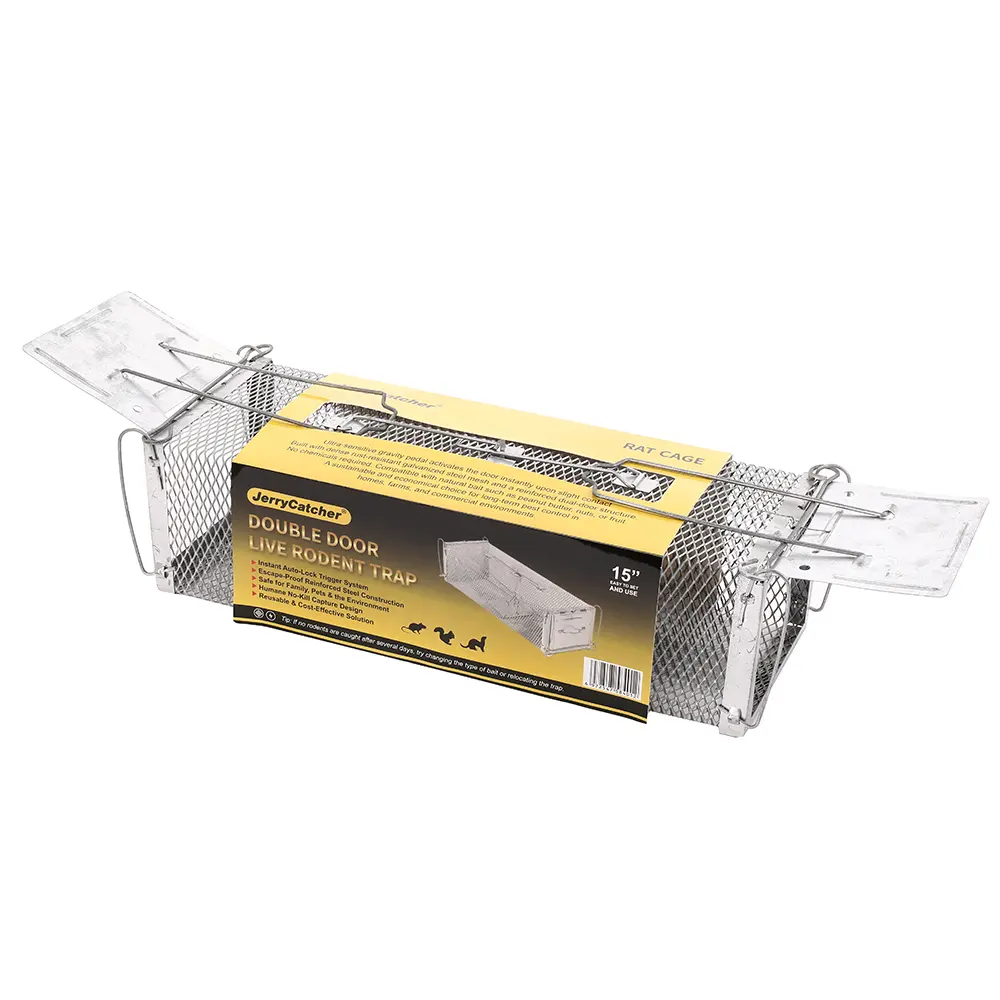
Mouse Trap Cage
A mouse trap cage uses an enclosed structure to capture a mouse without relying on a killing mechanism.
Cage traps can appeal to buyers who need a live-capture approach. However, capture creates additional handling requirements after the trap is triggered.
The cage needs a reliable entrance mechanism, suitable ventilation, sufficient internal space, and an easy inspection method.
EPA identifies live traps as an option for capturing rodents alive. It also notes that captured rodents still require appropriate handling and that releasing rodents without addressing entry points can allow them to return.
For B2B procurement, cage traps may therefore require a different service protocol from disposable or lethal trap formats.
Table: Comparison of common mouse trap formats for B2B applications
| Trap type | Main attraction mechanism | Reuse potential | Key purchasing consideration | Typical commercial use |
|---|---|---|---|---|
| Snap trap | Bait + mouse movement | Usually reusable | Trigger and mechanical reliability | Pest control, warehouses, buildings |
| Glue board | Adhesive surface + placement | Usually disposable | Adhesive stability | Monitoring and specific indoor applications |
| Cage trap | Bait + enclosed entry | Reusable | Door mechanism and handling | Live-capture programs |
| Baited trap station | Bait or trap mechanism | Depends on insert | Security and access control | Commercial facilities |
How Should B2B Buyers Evaluate What Attracts Mice to a Trap?
The strongest purchasing decision comes from connecting mouse behavior with product specifications.
A distributor selling traps to pest control professionals needs more than a general statement about “strong attraction.” The buyer needs to understand what creates the attraction and how the product performs under actual conditions.
Evaluate the Bait Area
A snap trap should provide an appropriate area for bait application.
The bait surface should support common bait materials without causing unnecessary mess. Its location should also encourage the mouse to interact with the trigger.
For private-label products, buyers can specify bait cup dimensions, texture, surface shape, and trigger position.
Examine Adhesive Performance
Glue boards depend heavily on adhesive consistency.
The adhesive should maintain its intended properties across the expected storage and operating range. Packaging should protect the adhesive from contamination before use.
For international distribution, storage temperature can vary considerably between factories, ports, warehouses, and final markets.
A supplier should therefore provide storage recommendations and, where applicable, test data.
Check Mechanical Components
Snap traps contain springs, triggers, bars, and other mechanical components.
Material selection affects corrosion resistance, durability, and repeated-use performance. A trap intended for long-term professional use may require different materials from a low-cost retail product.
Manufacturing tolerances also matter. A small change in trigger geometry can affect how the trap responds.
Review Packaging and Shelf Life
Packaging serves more than a branding function. It protects the trap during transportation and storage.
Glue boards need protection from dust and premature exposure. Snap traps need protection from deformation and accidental activation. Cage traps need packaging that prevents damage to doors and mechanisms.
B2B buyers should confirm carton dimensions, units per carton, pallet configuration, storage conditions, and shelf-life expectations.
What Should Wholesale Mouse Traps Buyers Consider for Different Markets?
A wholesale program needs to account for more than trap performance. Distribution channels, application requirements, packaging, regulations, and customer expectations all affect the product specification.
Pest Control Distributors
Professional pest control companies may purchase multiple trap types at the same time.
They may need compact traps for residential work, larger mechanical designs for commercial buildings, and glue boards for monitoring.
Packaging should support field use. Instructions should clearly explain placement, handling, and disposal requirements.
Bulk purchasing also makes consistency important. A distributor needs the same dimensions, trigger behavior, adhesive characteristics, and packaging specifications across repeat orders.
Food Processing and Storage Facilities
Food-related facilities require careful trap placement because food contamination presents a major operational concern.
Traps should not interfere with food handling or create unnecessary contamination risks. Pest management programs should follow applicable sanitation procedures and facility requirements.
Mice may already have access to food in these environments. That makes location and monitoring especially important.
A trap supplier serving this market should understand that the product forms only one part of a broader pest management program.
Warehouses and Logistics Facilities
Warehouses often contain large quantities of packaging, stored goods, and multiple access points.
Loading docks, doors, utility penetrations, storage zones, and perimeter areas may require regular monitoring.
A compact trap can be useful where floor space is limited. A protected trap station can provide additional control where people or equipment could interfere with an exposed trap.
Agricultural Applications
Farms, feed storage areas, barns, and agricultural buildings can provide abundant food and shelter.
Grain, animal feed, and stored materials can create strong competing attractions. Trap placement therefore requires attention to mouse movement rather than bait alone.
Environmental exposure also matters. Dust, moisture, temperature changes, and rough handling can affect trap performance.
Buyers should match material selection and packaging with the intended agricultural environment.
Retail Pest Control Products
Retail buyers usually need clear packaging and simple product instructions.
Consumers may compare trap count, trap format, bait requirements, reusable features, and disposal methods.
A retail package should make the intended application easy to understand. Technical information should remain accurate without overwhelming the end user.
For private-label programs, the supplier should align packaging specifications with the destination market.
How Can Suppliers Improve Trap Performance Without Overusing Bait?
Bait is important, but adding more bait does not automatically improve trapping results.
A mouse may encounter several food sources in the same area. If a trap requires the mouse to leave a protected route, even an attractive bait may not work as expected.
The better approach combines attraction with placement.
Reduce Competing Food Sources
Food management can make traps more relevant to mice.
The CDC recommends storing food in tightly sealed containers and cleaning spilled food promptly. It also recommends putting pet food away after use.
For commercial facilities, this can involve stricter housekeeping procedures.
A warehouse may need sealed feed containers. A restaurant may need regular cleaning around equipment. A property manager may need better waste storage.
Removing competing food sources does not replace trapping. It makes the trapping environment more controlled.
Match Trap Size to Mouse Activity
Trap size should correspond with the target species and environment.
A compact mouse trap may fit narrow areas. A larger design may provide greater handling space but require more room.
The product should also allow appropriate inspection. Traps hidden behind equipment can become difficult to monitor if their design does not support easy access.
Consider Environmental Conditions
Humidity and temperature can affect trap performance.
Metal components may corrode in damp environments. Glue can change behavior under temperature extremes. Dust can interfere with mechanical parts.
For B2B buyers, environmental testing can be more useful than generic laboratory claims.
A supplier can evaluate traps under representative conditions before mass production.
What Are the Most Important Specifications When Ordering Mouse Traps in Bulk?
A procurement specification should translate the intended application into measurable requirements.
The exact list will vary by trap type, but several categories deserve attention.
| Specification area | What to confirm |
|---|---|
| Trap type | Snap, glue board, cage, or combination |
| Target pest | House mouse or other specified rodent |
| Dimensions | Overall size and usable placement area |
| Materials | Plastic, metal, wood, adhesive board, or other materials |
| Trigger | Trigger shape, sensitivity, and reset mechanism |
| Adhesive | Coverage, formulation, and storage requirements |
| Bait area | Size and position |
| Packaging | Individual pack, inner carton, master carton |
| Storage | Temperature, humidity, and shelf-life requirements |
| Application | Residential, commercial, agricultural, food facility, or other |
| Compliance | Destination-market requirements |
| Private label | Artwork, packaging, instructions, and carton marks |
| Inspection | Functional, dimensional, material, and packaging checks |
Private-Label Requirements
Private-label buyers should define the product before artwork begins.
A clear specification can include trap dimensions, materials, trigger structure, adhesive type, packaging format, color, logo position, warning information, and carton requirements.
Samples should then be evaluated against the approved specification.
For repeat orders, the same criteria should remain in place unless both parties approve a change.
Quality Control for Large Orders
Quality inspection should cover more than appearance.
Mechanical traps require functional checks. Glue boards require adhesive and surface inspection. Cage traps require door and trigger testing.
Packaging inspection also matters because damaged cartons can affect product condition during shipping.
For international buyers, pre-shipment inspection can reduce the risk of receiving a batch that differs from the approved sample.
FAQ About What Attracts Mice to Mouse Traps
What attracts mice to traps most effectively?
Food odors, familiar travel routes, shelter, and access to water can all influence mouse movement. Bait works best when the trap sits along an active route.
What food attracts mice to snap traps?
Peanut butter, seeds, nuts, and grain-based foods are commonly used. The appropriate bait depends on the local environment and available competing food sources.
Do mice always go toward bait?
No. Mice may ignore bait if the trap sits away from their normal travel route. Environmental food, shelter, and access patterns also influence movement.
Where should mouse traps be placed?
Traps should generally be placed where there is evidence of mouse activity. Walls, cabinets, storage areas, behind appliances, and entry routes can be relevant locations.
The CDC recommends placing traps near signs such as droppings, nesting materials, gnawed food, and gnaw marks.
Are mouse glue boards reusable?
Most glue boards are designed for single use. Their adhesive surface becomes unsuitable after capture or contamination.
Are snap traps reusable?
Many snap traps can be reset and reused. The CDC provides cleaning guidance for traditional snap traps intended for reuse.
What is a mouse trap cage used for?
A mouse trap cage is designed to capture a mouse without using a killing mechanism. It may suit applications that require live capture.
Should wholesale mouse traps include bait?
Not necessarily. Some trap programs use separate bait materials. Others include attractants or bait areas as part of the trap design.
The correct configuration depends on the intended market and application.
What should distributors check before buying mouse traps in bulk?
Distributors should review trap type, dimensions, materials, trigger or adhesive performance, packaging, storage requirements, compliance, and repeat-order consistency.
Can one trap type serve every commercial application?
Usually, different environments require different trap configurations. Residential buildings, food facilities, warehouses, farms, and pest control services can have different placement and handling requirements.
Conclusion
What attracts mice to mouse traps is rarely just one ingredient. Food odor can encourage investigation, while walls, shelter, moisture, and established travel routes determine where mice move. A trap becomes more useful when its design matches that behavior.
For B2B buyers, trap selection should therefore start with the application. Snap traps can support reusable mechanical trapping programs. Glue boards provide adhesive-based capture and monitoring options. Cage traps address live-capture requirements.
Product specifications should cover more than the trap itself. Materials, dimensions, trigger design, adhesive characteristics, packaging, storage, inspection, and destination-market requirements all influence commercial suitability.
Placement also remains essential. The CDC recommends using traps in areas with evidence of rodent activity and keeping traps away from children and pets.
A complete rodent management program also addresses food, water, shelter, and entry points. Trapping works more effectively when the surrounding environment does not continuously provide alternative resources.
Lanxi Puyoung supplies mouse control products for international B2B customers, with product options covering mechanical traps, glue boards, cage traps, and related pest control solutions. The company supports wholesale and private-label requirements with attention to product specifications, packaging, and application needs.
References
- Centers for Disease Control and Prevention, How to Trap Up to Remove Rodents
https://www.cdc.gov/healthy-pets/rodent-control/trap-up.html - Centers for Disease Control and Prevention, Controlling Wild Rodent Infestations
https://www.cdc.gov/healthy-pets/rodent-control/ - Centers for Disease Control and Prevention, How to Seal Up to Prevent Rodents
https://www.cdc.gov/healthy-pets/rodent-control/seal-up.html - Centers for Disease Control and Prevention, How to Clean Up After Rodents
https://www.cdc.gov/healthy-pets/rodent-control/clean-up.html - U.S. Environmental Protection Agency, Options for Dealing With Rodent Infestations
https://www.epa.gov/rodenticides/options-dealing-rodent-infestations - U.S. Environmental Protection Agency, Pesticide Devices: A Guide for Consumers
https://www.epa.gov/pesticides/pesticide-devices-guide-consumers - U.S. Environmental Protection Agency, Pesticide Labeling Questions & Answers
https://www.epa.gov/pesticide-labels/pesticide-labeling-questions-answers