How to Remove Mouse Trap Glue Safely from Skin, Clothes & Pets
September 18, 2026
Mouse glue traps are widely used for rodent control in homes, warehouses, restaurants, supermarkets, food processing areas, and other commercial environments. Their strong adhesive helps capture mice effectively, but accidental contact can sometimes happen.
You may get mouse trap glue on your hands, clothes, hair, floor, furniture, or even on a pet.
So, how can you remove mouse trap glue safely?
In most cases, the best approach is to avoid pulling forcefully and use a mild oil to gradually loosen the adhesive.
This guide explains how to safely remove mouse glue from skin, clothes, hair, pets, and common household surfaces.
What Is Mouse Trap Glue?
Mouse glue boards use a strong, long-lasting pressure-sensitive adhesive designed to remain sticky for an extended period.
Unlike ordinary household glue, mouse trap adhesive is formulated to maintain its tackiness under different environmental conditions.
This is important because a glue board must remain effective long enough for a mouse to step onto the adhesive surface.
However, the same strong adhesive properties can make the glue difficult to remove if it accidentally comes into contact with other surfaces.
How to Remove Mouse Trap Glue from Skin
If mouse trap glue gets on your hands or skin, do not pull or scrape aggressively.
Strong pulling may irritate or damage the skin.
Instead, follow these steps.
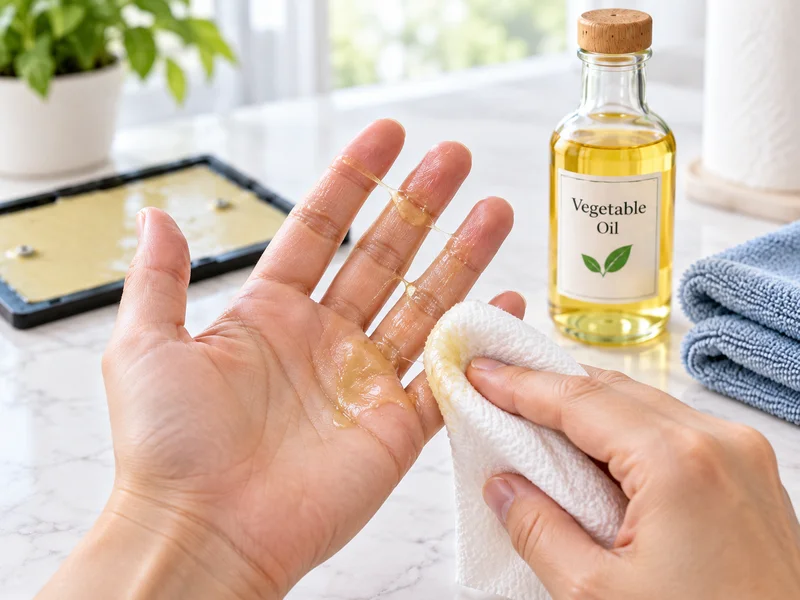
Step 1: Apply Vegetable Oil
Apply a small amount of vegetable oil, olive oil, baby oil, or mineral oil to the affected area.
Gently massage the oil into the glue.
Allow it to sit for several minutes so the adhesive can gradually soften.
Step 2: Gently Wipe Away the Glue
Once the glue becomes softer, use a soft cloth, tissue, or cotton pad to gently wipe it away.
If some adhesive remains, apply more oil and repeat the process.
Avoid using sharp objects to scrape the skin.
Step 3: Wash with Soap and Warm Water
After most of the glue has been removed, wash the area thoroughly with warm water and soap.
This will help remove both the remaining adhesive and excess oil.
If the skin becomes painful, swollen, irritated, or damaged, seek appropriate medical advice.
How to Remove Mouse Trap Glue from Clothes
Mouse glue on clothing can be more difficult to remove because the adhesive may penetrate the fabric fibers.
Start by removing as much excess glue as possible using a plastic scraper, spoon, or piece of cardboard.
Do not spread the adhesive further into the fabric.
Next, apply a small amount of vegetable oil to the affected area and allow the adhesive to soften.
Gently blot the glue with a paper towel or soft cloth.
After removing the adhesive, wash the clothing with laundry detergent according to the fabric care instructions.
For delicate materials such as silk, wool, leather, or coated fabrics, test the cleaning method on a small hidden area first.
For valuable clothing, professional cleaning may be the safer option.
How to Remove Mouse Trap Glue from Hair
If glue gets into your hair, do not pull the hair away from the adhesive forcefully.
Doing so may cause hair breakage or scalp discomfort.
Apply vegetable oil, olive oil, or baby oil generously to the affected hair.
Massage the oil into the glue and allow it to soften.
Then slowly separate the strands using your fingers or a wide-tooth comb.
Start from the ends of the hair and work upward gradually.
Once the glue has been removed, wash the hair thoroughly with shampoo.
You may need to repeat the process if a large amount of adhesive is present.
What to Do If a Pet Gets Stuck on a Mouse Glue Board
Cats and dogs may accidentally step onto a glue board if traps are placed in accessible areas.
If this happens, do not pull the pet away from the board quickly.
Strong pulling can damage fur, skin, or paws.
Instead, apply a small amount of vegetable oil around the area where the fur or paw is stuck.
Gently massage the oil into the adhesive until it begins to loosen.
Slowly separate the pet from the glue board.
Afterward, wash the affected area with warm water and a pet-safe cleaning product.
If glue enters the pet’s eyes, mouth, or nose, or if the pet has swallowed a significant amount of adhesive, contact a veterinarian.
For long-haired pets or large areas of adhesive contact, professional veterinary or grooming assistance may be recommended.
How to Remove Mouse Glue from Floors
Mouse glue can sometimes fall onto floors during trap installation or removal.
For surfaces such as ceramic tile, glass, or metal, apply a small amount of vegetable oil to the adhesive.
Allow it to soften for several minutes.
Then wipe the glue away with a soft cloth or paper towel.
Finally, clean the surface using warm water and a mild detergent to remove oily residue.
For wooden floors, painted surfaces, laminate, leather, or coated materials, always test the cleaning method on a small hidden area first.
Certain cleaning chemicals may damage the surface finish.
Can You Use Alcohol or Strong Solvents to Remove Mouse Glue?
Strong solvents such as gasoline, paint thinner, or aggressive adhesive removers are generally not recommended for skin or pets.
They may cause irritation and can create unnecessary safety risks.
For skin, hair, and pet fur, mild oils are usually a more suitable first option.
When cleaning industrial surfaces or special materials, follow the manufacturer’s cleaning instructions and test the cleaning product before applying it to a large area.
What Should You Do If Mouse Glue Gets into Your Eyes?
Do not rub your eyes.
Do not apply oil, alcohol, gasoline, or strong solvents to the eyes.
Rinse the affected eye immediately with plenty of clean water for at least 15 minutes.
If irritation, pain, blurred vision, or adhesive residue remains, seek professional medical assistance.
What If Mouse Trap Glue Is Accidentally Swallowed?
If a child, adult, or pet accidentally swallows mouse trap adhesive, do not automatically induce vomiting.
Keep the product packaging or product information available and contact an appropriate medical professional, poison information service, or veterinarian.
Mouse glue formulations can vary between manufacturers, so professional advice should be based on the specific product involved.
How to Prevent Accidental Contact with Mouse Glue Boards
Proper placement is one of the easiest ways to reduce accidental contact.
Mouse glue boards are commonly positioned:
- Along walls
- Behind cabinets
- Under shelves
- Behind kitchen equipment
- Near known rodent entry points
- Inside warehouses
- In storage areas
Along common mouse travel routes
Avoid placing glue traps in areas easily reached by children or pets.
In households or commercial environments where pets are present, glue boards can also be placed inside protective trap stations or tunnel-style covers.
This can help reduce accidental contact while still allowing mice to access the trap.
Why Are Mouse Glue Boards So Sticky?
The effectiveness of a mouse glue board depends heavily on the quality of the adhesive.
A suitable mouse trap adhesive should provide:
Strong initial tack
Long-lasting stickiness
Stable performance
Good resistance to drying
Reliable performance under different temperature
Different markets may also require different adhesive formulations.
For example, mouse glue boards used in hot climates may require adhesive designed to maintain suitable performance at higher temperatures.
This is why professional manufacturers may offer different glue formulations according to the customer’s target market and environmental conditions.
How Often Should Mouse Glue Boards Be Checked?
Mouse glue boards should be checked regularly after installation.
The exact frequency depends on the environment, rodent activity, dust level, and local pest management requirements.
Glue boards should be replaced when:The adhesive surface becomes dusty
The board becomes wet
The glue loses its tackiness
The trap becomes contaminated
A rodent has already been captured
Regular inspection helps maintain effective rodent control.
FAQ About Mouse Trap Glue
Can mouse trap glue be washed off with water?
Usually, water alone is not enough.
Mouse trap adhesive is generally not designed to dissolve easily in water.
Using a small amount of oil first can help loosen the adhesive before washing with soap and warm water.
Can vegetable oil remove mouse trap glue?
For many common mouse glue formulations, vegetable oil can help reduce adhesion and make the glue easier to remove.
Results may vary depending on the specific adhesive formulation.
Is mouse trap glue toxic?
Glue formulations vary between manufacturers.
Users should always follow the instructions provided with the product.
For commercial buyers and importers, product documentation such as SDS or MSDS can provide additional information about product composition and safe handling.
Can mouse glue boards be used around pets?
They can be used in environments with pets, but placement is important.
Glue boards should be positioned where pets cannot easily reach them.
Protective trap stations or enclosed tunnel-style placements can further reduce accidental contact.
Choosing the Right Mouse Glue Board
A reliable mouse glue board should combine strong adhesive performance with suitable board strength, packaging, and environmental stability.
For importers, wholesalers, distributors, supermarkets, and pest control companies, choosing the correct specification depends on several factors, including:
- Board size
- Total weight
- Adhesive weight
- Target rodent size
- Local temperature
- Packaging requirements
- Private label requirements
- Distribution marke
Different markets may prefer different sizes and adhesive strengths.
Working directly with an experienced manufacturer makes it easier to select the right specification for local market conditions.
Professional Mouse Glue Board Manufacturer in China
Lanxi Puyoung Commodity Co., Ltd. is a professional manufacturer of physical pest control products in China.
Under our JerryCatcher brand, we manufacture different types of mouse glue boards for importers, distributors, wholesalers, supermarkets, and pest control companies.
Our mouse glue boards are available with different:
- Sizes
- Total weights
- Adhesive weights
- Glue formulations
- Packaging styles
- Optional attractants
- OEM designs
- Private label options
Adhesive performance can also be adjusted according to different temperature and market requirements.
In addition to mouse glue boards, we manufacture and supply cockroach glue traps, fly traps, UV light glue boards, mouse cages, mouse snap traps, and other physical pest control products.
OEM and private label services are available for qualified bulk orders.
For product specifications, samples, packaging options, SDS/MSDS documents, or wholesale quotations, please contact us.