Why Do Fly Glue Traps Work? Surprising Fly Facts Behind the Trapping Principle
September 5, 2026
For importers, wholesalers, distributors, pest control suppliers, and private-label brands, a fly glue trap may look like a simple pest control product.
A sticky surface catches a fly. Simple, right?
However, the effectiveness of a fly glue trap is closely connected to the natural behavior of flies.
Flies have some surprisingly interesting habits. They can detect food through receptors on their feet, frequently land on different surfaces, react quickly to movement, and naturally move between food sources, resting areas, windows, walls, and other locations.
These behaviors help explain why a properly designed fly glue trap can work effectively without complicated mechanical structures.
So, what makes flies land on certain surfaces, and how does a fly glue trap take advantage of their natural behavior?
This article takes a closer look at the science behind fly behavior and adhesive trapping.
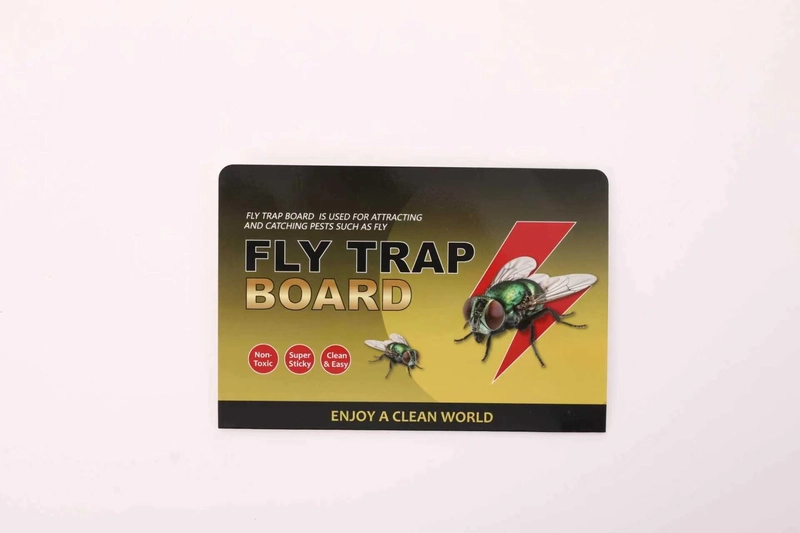
What Are Some Surprising Facts About Flies?
Flies are much more complex than they may appear.
Their body structure, sensory system, feeding habits, and movement patterns are all adapted to help them quickly locate food and survive in different environments.
Several characteristics are particularly relevant to physical fly control:
- Flies frequently land on surfaces.
- Their feet contain chemical receptors.
- They are highly sensitive to movement.
- Many fly species are active during daylight.
- They regularly move between feeding and resting locations.
- They can walk on walls and ceilings.
- Warm environments can support greater fly activity and reproduction.
These behaviors create opportunities for physical trapping.
The basic trapping logic can be summarized as:
Natural Fly Activity → Surface Searching → Landing → Contact with Adhesive → Physical Capture
Instead of chasing the fly, a glue trap waits for the fly to make contact with the trapping surface.

Why Do Flies Land So Frequently?
Fact 1: Flies Spend a Lot of Time Landing
One important characteristic of flies is their frequent landing behavior.
A fly does not simply remain in the air throughout its active period. It repeatedly moves between different locations, including:
- Food areas
- Walls
- Windows
- Doors
- Waste areas
- Resting surfaces
- Equipment
- Other suitable landing points
This behavior is important when considering where a fly glue trap should be placed.
A trap positioned in an area with little fly activity may naturally have fewer opportunities to make contact with flies. A trap positioned near frequently used fly routes or resting areas has a greater chance of being encountered.
For this reason, placement is an important part of adhesive fly control.
Can Flies Really Taste with Their Feet?
Fact 2: Flies Have Chemical Receptors on Their Feet
One of the most interesting facts about flies is that they can detect certain chemical substances through sensory receptors located on their legs and feet.
When a fly lands on a surface, these receptors can help it evaluate whether the surface may contain something worth feeding on.
This is one reason flies are often seen walking around after landing.
From a pest control perspective, this behavior is particularly interesting.
A fly does not always land and immediately leave. It may:
Land → Walk → Investigate → Feed or Move Again
Every additional moment of surface contact creates an opportunity for an adhesive trapping surface to work.
Once the legs or body make sufficient contact with a properly formulated adhesive, escape becomes much more difficult.
Why Are Flies So Difficult to Swat?
Fact 3: Flies Are Highly Sensitive to Movement
Anyone who has tried to catch a fly by hand knows how quickly it can escape.
Flies have compound eyes and a visual system that is highly effective at detecting movement. When a large object approaches, the fly can rapidly react and take off.
This explains why active methods, such as chasing or swatting individual flies, can sometimes be frustrating.
A glue trap works differently. It does not need to chase the insect.
Instead, the principle is passive:
The trap remains stationary and uses the fly’s own movement and landing behavior to create contact with the adhesive.
This is one of the major differences between adhesive trapping and active mechanical control.
Why Can Flies Walk on Walls and Ceilings?
Fact 4: Fly Feet Are Designed for Surface Contact
Flies are able to move across a wide variety of surfaces.
Their feet contain specialized structures that help them maintain contact with walls, glass, ceilings, and other materials.
This ability allows flies to explore many different parts of an indoor environment. It also means fly activity is not limited to floors or tables.
Depending on the environment and fly species, activity may occur around:
- Windows
- Walls
- Ceilings
- Food preparation areas
- Waste collection points
- Entrances
- Storage areas
- Lighting areas
Understanding these activity patterns can help determine more suitable locations for physical fly traps.
Why Do Flies Often Appear Around Food and Waste?
Fact 5: Food and Odor Sources Influence Fly Activity
Flies use multiple sensory cues when searching for suitable feeding and breeding environments.
Food residues, organic waste, decaying materials, animal waste, and other odor-producing materials can attract certain common pest flies.
This is why fly problems frequently occur around:
- Restaurants
- Food processing facilities
- Kitchens
- Farms
- Markets
- Garbage collection areas
- Warehouses
- Animal facilities
However, a glue trap should not be viewed as a replacement for sanitation.
Removing food residues, controlling waste, cleaning breeding sources, and preventing fly entry remain important parts of fly management.
Glue traps can then work as part of a broader physical pest control strategy.
How Does a Fly Glue Trap Work?
The operating principle of a fly glue trap is relatively straightforward.
A specially prepared adhesive is applied to a suitable trapping surface. The trap is then positioned where flies are likely to encounter it.
The process can be summarized as follows:
Step 1: Flies Enter or Move Through the Area
Flies naturally search for food, resting locations, light, or other suitable environmental conditions.
Step 2: Flies Approach a Suitable Surface
During normal activity, flies repeatedly approach and land on different surfaces.
Step 3: The Fly Lands on the Glue Trap
When the fly lands on or walks across the adhesive area, its legs make contact with the sticky surface.
Step 4: Adhesive Contact Increases
As the fly attempts to move, additional parts of its legs or body may contact the adhesive.
Step 5: The Fly Is Physically Captured
The adhesive restricts movement and prevents the fly from easily leaving the trapping surface.
The basic principle is therefore:
Fly Movement → Landing → Adhesive Contact → Physical Capture
No complicated mechanical trapping mechanism is required.
Why Is Adhesive Performance Important?
Fly behavior creates the opportunity for capture.
The adhesive determines whether that opportunity becomes a successful trap.
A suitable fly-trapping adhesive needs to maintain sufficient tack during normal storage and use.
If the adhesive performs poorly, several problems may occur:
- Insufficient initial contact
- Reduced trapping performance
- Adhesive instability
- Poor performance under different environmental conditions
- Inconsistent product quality
For wholesale and professional pest control markets, adhesive quality therefore needs to be considered together with the design of the trapping surface.
The product is not simply “sticky paper.”
It is a combination of:
Trap Design + Adhesive Performance + Fly Behavior + Correct Placement
Does Trap Placement Affect Capture Performance?
Yes.
Even a highly sticky fly glue trap cannot capture flies if they never encounter it.
Placement should therefore consider actual fly activity.
Depending on the application environment, suitable locations may include areas near:
- Fly activity routes
- Windows
- Entrances
- Resting areas
- Waste management areas
- Food-related environments
- Other locations where flies are frequently observed
However, traps should always be positioned according to product instructions and the hygiene requirements of the application environment.
In commercial environments, placement should also avoid unnecessary interference with food, equipment, employees, and customers.
Fly Glue Trap and Natural Fly Behavior
The relationship between fly behavior and adhesive trapping can be understood as a complete process:
- Fly searches for food or a resting location.
- Fly moves through the environment.
- Fly approaches a suitable surface.
- Fly lands.
- Feet contact the adhesive.
- Movement creates additional adhesive contact.
- Fly becomes physically trapped.
- Used glue trap is replaced when necessary.
This is why understanding pest behavior matters when designing and using physical pest control products.
The trap itself is simple.
The biological behavior behind the capture process is not.
Why Does Fly Glue Trap Quality Matter for B2B Buyers?
For importers and distributors, evaluating a fly glue trap should involve more than simply touching the adhesive and deciding whether it “feels sticky.”
Professional buyers may also consider the following factors.
1. Adhesive Stability
The adhesive should maintain suitable performance under the intended storage and application conditions.
2. Trapping Surface
The usable adhesive area should match the intended product design and application.
3. Board or Base Material
The supporting material should remain suitable during storage, transportation, and normal use.
4. Product Consistency
For wholesale orders involving thousands or tens of thousands of pieces, consistency between production batches becomes especially important.
5. Packaging
Appropriate packaging helps protect the adhesive product before use and supports retail or professional distribution.
6. Application Scenario
Different markets may require different fly control products for restaurants, warehouses, farms, food facilities, homes, or commercial pest control.
Can Fly Glue Traps Be Customized?
Yes.
Different markets may require different fly glue products.
For OEM and private-label projects, product specifications can be discussed according to actual order requirements.
Customization options may include:
- Product dimensions
- Board or base design
- Adhesive quantity
- Surface printing
- Customer logo
- Brand artwork
- Retail packaging
- Instructions
- Master carton printing
If buyers already have a fly glue product that sells well in their local market, they can also provide existing samples, dimensions, packaging references, or product specifications for product development.
What Should Buyers Confirm Before Requesting a Quotation?
Instead of asking only:
“How much is your fly glue trap?”
Professional buyers can provide more complete information:
Product: Fly Glue Trap
Size: Required dimensions
Quantity: Estimated order quantity
Design: Standard / Customized
Packaging: Standard / Customized
Brand: JerryCatcher / Private Label
Destination Market: Country / Region
OEM: Yes / No
Providing more complete information helps the manufacturer recommend a more suitable configuration and prepare a more accurate quotation.
Frequently Asked Questions
Why Do Fly Glue Traps Work?
Fly glue traps take advantage of the natural movement and frequent landing behavior of flies. When a fly lands on the adhesive surface, the glue restricts its movement and physically captures it.
Can Flies Really Taste with Their Feet?
Flies have chemical receptors on their legs and feet that help them detect certain substances when they land and walk across surfaces.
Why Are Flies Difficult to Catch by Hand?
Their compound eyes and visual system are highly sensitive to movement, allowing them to react rapidly to approaching objects.
Does a Stickier Trap Always Mean a Better Trap?
Not necessarily.
Professional trapping performance also depends on adhesive formulation, stability, trapping surface, product design, environmental conditions, placement, and production consistency.
Where Should Fly Glue Traps Be Placed?
They should generally be positioned in locations where fly activity is frequently observed, while following product instructions and hygiene requirements for the specific environment.
Can We Use Our Own Brand?
Yes.
OEM and private-label services are available. Logo, artwork, specifications, and packaging can be discussed according to project requirements.
Looking for a Fly Glue Trap Manufacturer?
A fly glue trap may appear to be a simple product, but its trapping principle is closely connected with the natural behavior of flies.
From frequent landing and surface exploration to adhesive contact and physical capture, understanding how flies behave helps explain why glue traps can be an effective part of a physical fly control program.
For B2B buyers, choosing a long-term supplier should therefore involve more than comparing unit prices.
Adhesive performance, production consistency, product specifications, customization capability, packaging, and bulk production capacity are also important considerations.
Lanxi Puyoung Commodity Co., Ltd. | JerryCatcher
Fly Glue Trap Manufacturer | Wholesale | OEM & Private Label